Security | Threat Detection | Cyberattacks | DevSecOps | Compliance

Meeting ISO 27001 Third-Party Risk Requirements

ISO 27001 compliance provides greater assurance that an organization is adequately managing its cybersecurity practices, such as protecting personal data and other types of sensitive data. Third-party risk management (TPRM) programs can benefit immensely from implementing the relevant ISO 270001 controls to mitigate the risk of significant security incidents and data breaches.
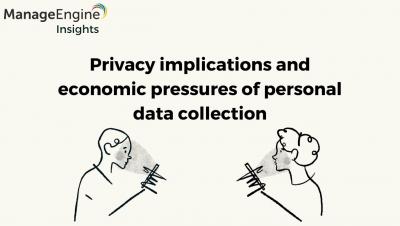

Defining the market dynamics of personal data ft. Joe Toscano | Insights Podcast

In this episode of ManageEngine Insights podcast, we'll explore the privacy implications personal data collection, as well as the economic influences on the past, present, and future of this practice. This episode is a conversation that features Joe Toscano, a user experience designer, with an interest in data rights, data protection, privacy in tech, and ethical innovation of AI. Joe is the CEO and co-founder of BEACON, a public speaker, the author of "Automating Humanity," and was featured as an interviewee in "The Social Dilemma."

How to Build Cyber Security Awareness Among Employees?

According to a PwC poll, the epidemic has increased the number of employees working from home to almost 70%. Remote working, however, has its own set of risks. Companies are vulnerable to a host of network attacks because of employee-owned devices, insecure connections, and inappropriate device usage. That is where cybersecurity awareness training for employees comes into the picture and plays a key role in preventing cyber attacks.

What Are the Benefits of Investing in Cloud Storage Security?

As more and more businesses and individuals choose to store their data online, ensuring the safety of information is becoming exceptionally crucial. According to recent statistics from the Hosting Tribunal, over 95% of IT professionals use cloud storage. This number is expected to grow steadily.

vCISOs Explained: The Benefits and Drawbacks

An increasing number of modern security conscious companies have Chief Information Security Officers (CISOs) on the payroll to help them manage their environment from increasingly sophisticated cyber threats. Unfortunately, many other organizations are not currently able to employ a full time CISO. This can be related to a series of contributing factors including a lack of necessary budget, competing priorities, or unfilled vacancies due to a shortage of qualified candidates.

Understanding The HIPAA Breach Notification Rule

HIPAA requires covered entities and business associates to secure protected health information (PHI). Failing to do so can result in steep fines and penalties. Some PHI breaches, however, are out of the organization’s control. Determined hackers can expose PHI, and employees can make mistakes — they’re only human, Despite training, rigorous security protocols, and constant monitoring, data breaches can happen.

6 Steps to Defend Against Advanced Persistent Threats

The cybersecurity community uses the term Advanced Persistent Threats to refer to threats that have extremely long persistence on a particular target—often lurking inside a target system for years. Their targets can include government agencies (at all levels), including contractors and suppliers far down the supply chain. Due to their passive nature, you may not even realize that your organization is a target for an APT. In fact, your infrastructure may already be infiltrated.