Security | Threat Detection | Cyberattacks | DevSecOps | Compliance

Cisco Patches ASA, FTD, and IOS Vulnerabilities, Including Critical and Exploited Flaws

On September 25, 2025, Cisco released fixes for two vulnerabilities in Adaptive Security Appliance (ASA) and Firewall Threat Defense (FTD) that are currently being actively exploited by a sophisticated threat actor. The US Cybersecurity and Infrastructure Security Agency (CISA) issued Emergency Directive 25-03 requiring Federal Civilian Executive Branch (FCEB) agencies to patch these vulnerabilities by 12 PM EDT on September 26.

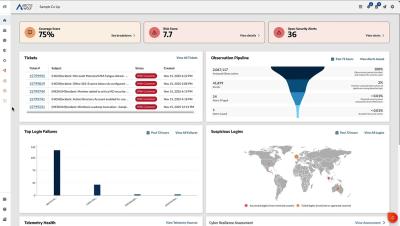
The Aurora Endpoint Experience: Test Drive Market-Leading Endpoint Security

Endpoint security offers immense value to organizations looking to harden their attack surface and reduce overall risk. But endpoint security has evolved considerably over the decades, and not all endpoint security is created equal. Aurora Endpoint Security delivers market-leading AI-driven prevention, detection, and response, stopping threats before they disrupt your business.

Smash and Grab: Aggressive Akira Campaign Targets SonicWall VPNs, Deploys Ransomware in an Hour or Less

In late July 2025, Arctic Wolf Labs began observing a surge of intrusions involving suspicious SonicWall SSL VPN activity. Malicious logins were followed within minutes by port scanning, Impacket SMB activity, and rapid deployment of Akira ransomware. Victims spanned across multiple sectors and organization sizes, suggesting opportunistic mass exploitation. This campaign has recently escalated, with new infrastructure linked to it observed as late as September 20, 2025.

9 Little-Known Facts About Managed Detection and Response (MDR)

Managed Detection and Response (MDR) is a security service that has become a cornerstone of modern cybersecurity strategies. It’s designed to provide 24/7 threat monitoring, detection, and response capabilities, especially for organizations that lack the resources for an in-house security operations center (SOC). But while many have heard of MDR, there are still some common misconceptions and little-known facts about this powerful service.

REDCap: Multiple Cross-Site Scripting (XSS) Vulnerabilities

REDCap, developed by Vanderbilt University, is a secure platform designed for data collection in research studies and operations. REDCap is popular within scientific institutions and universities that require strict compliance with government regulations and data privacy laws when conducting data collection for research purposes. It is particularly useful for managing studies that often contain sensitive or private information.

SailPoint AI-Driven Identity Governance: Access Modeling

Join Xalient experts Dave Cox, VP of Identity Services, Ryan Cluff, Director - IGA Practice and Kevin Bender, Senior Manager - IGA Practice, as they dive into the challenges of role-based access control (RBAC) and how to effectively use SailPoint’s AI Access Modeling to build, refine, and govern role models at scale. Learn how organizations can avoid stale role definitions and adopt sustainable, data-driven approaches.

How to Spot and Stop Security Risks From Unmanaged AI Tools: Shadow AI, LLM Agents, Compliance Risks

How to Spot and Stop Security Risks From Unmanaged AI Tools Shadow AI is exploding in organizations—developers are using AI tools and models without approval, often embedding them into production systems. In this webinar, Mend.io EVP of Product Management Nir Stern explains the real risks behind unmanaged AI tools, why traditional AppSec can’t keep up, and eight practical steps to regain control.

Scam-Proofing Loyalty at Scale: What ATO Protection in Retail Should Look Like in 2025

Retail fraud has gone public. It no longer happens quietly in the background. Today’s scams are faster, sharper, and designed to look exactly like your brand. A spoofed checkout flow can harvest thousands of credentials before your SOC team even sees a spike. But the real damage isn’t always technical. In 2025, one impersonation scam can trigger waves of fake complaints, social media outrage, and reputational backlash that cost far more than the fraud itself.