Security | Threat Detection | Cyberattacks | DevSecOps | Compliance

Backup retention policy best practices: A complete guide for enterprises

Many organizations invest heavily in backup solutions but still face a critical gap: the absence of a well-defined backup retention policy. Without a structured retention policy, backups may either be stored longer than necessary, driving up costs, or deleted prematurely, increasing compliance risks and limiting recovery options. In critical scenarios like ransomware attacks or system failures, organizations may find that their backups are incomplete, outdated, or unusable.

The Ultimate Guide to API Security in AI Applications

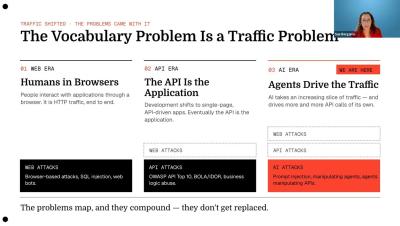
API security is the practice of protecting the interfaces that connect your applications, models, and data from unauthorized access, abuse, and data theft. In AI applications, APIs carry prompts, model responses, customer PII, and agent instructions, which makes them the single most exposed layer of your AI stack. Securing them requires authentication, rate limiting, encryption, and a layer most teams miss: protection of the sensitive data in every API call.

It's Not If Attackers Get In. It's What Happens Next | Insurity CISO Jay Wilson

"Usually it's not a question of if the bad guys get in. It's a question of what happens when they do." Jay Wilson, CISO and CIO at Insurity, and Garrett Hamilton, CEO of Reach, joined Shubhangi Dua on The Security Strategist from EM360Tech to talk about why the controls you already own are where exposure quietly builds up. That's Jay's line, and one every security leader has lived. Defense in depth only holds if every inner layer is configured the way you think it is. The outer door gets the attention. The inner doors are where incidents actually get stopped, or don't.

CMMC ESP Scoping for Managed Service Providers

The CMMC ecosystem is poised to be very strict in a very short amount of time, which means a lot of organizations are quickly finding that they need to do a lot of work in short order. A significant area of concern is where MSPs fall into the spectrum of security. Managed Service Providers are a key part of how modern digital businesses operate, but they’re also distinct and separate from the businesses themselves.

Risk-based vulnerability management explained

Risk-based vulnerability management (RBVM) is a cybersecurity methodology that prioritizes vulnerabilities based on actual business risk rather than technical severity scores in isolation. RBVM combines vulnerability severity, exploitation likelihood, threat intelligence, and asset criticality to focus remediation on the exposures most likely to be weaponized against your specific environment.

Let's Talk Security: Leading Healthcare Security Through Constant Change

Healthcare CISOs are navigating one of the most complex security environments. In this conversation, Barry Mainz will be joined by David Finkelstein, CISO, St. Luke’s University Health Network, a seasoned healthcare security leader with experience spanning cyber, operations, and military service, to discuss what it takes to build a modern healthcare cybersecurity program that is resilient today and ready for tomorrow.

AI Kill Switch Architecture: How to Stop a Rogue AI Agent

AI agents today are becoming a part and parcel of everyday enterprise operations. They can access databases, trigger workflows, send emails, approve requests, and interact with business systems with very little human involvement. What started as AI assistants is now evolving into autonomous operators capable of making decisions and executing actions at machine speed.