Security | Threat Detection | Cyberattacks | DevSecOps | Compliance

Ransomware Techniques Are Changing. Are MSPs Ready for This Shift?

Ransomware is evolving ‒ not fading. Despite a decline in attack detections based on WatchGuard Firebox telemetry, data from extortion sites and media reporting tells a different story: ransomware activity is actually on the rise, both quarter-over-quarter and year-over-year. The number of active ransomware groups is also increasing, as is the average ransom demand. In fact, the typical payout jumped from $400,000 in 2023 to $2 million in 2024 ‒ a staggering 500% spike.

Girona FC Kicks Off Security Partnership with WatchGuard

In an era where professional sports organizations increasingly rely on digital infrastructure, the risks associated with cyber threats are greater than ever. Girona FC, one of LaLiga’s rising professional football clubs, has taken a significant step to enhance its cybersecurity posture by partnering with WatchGuard Technologies. This move reflects the Club’s broader commitment to digital resilience and operational security.

Does Security Training Work? - The 443 Podcast - Episode 342

This week on the podcast, we discuss a recently published research study from UC San Diego on the effectiveness on security awareness training on phishing prevention. After that, we discuss a security researcher's work on identifying vulnerabilities in four separate employee webapps at Intel. Finally, we end with our analysis of a Ponemon Institute research report called The State of File Security.

Less ransomware, same risk. How can it be prevented?

Just because ransomware attacks have decreased doesn’t mean that the risk has disappeared. Indeed, it remains one of the most disruptive threats to any organisation. Headlines can convey a false sense of relief: Ransomware attacks are down 15%, according to Verizon's latest DBIR report. But for those of us who work in cybersecurity, we know that this doesn't tell the whole story, especially when the real issue isn't how often an attack occurs, but what happens when it does.

SIEM vs. XDR: 5 Things to Consider

As IT environments become more complex, organizations face rising threat volumes, persistent cybersecurity talent shortages, and adversaries capable of dwelling undetected for days and moving laterally within hours. In this context, choosing between SIEM and XDR is no longer a technical preference; it’s a strategic decision that shapes how your organization defends itself.

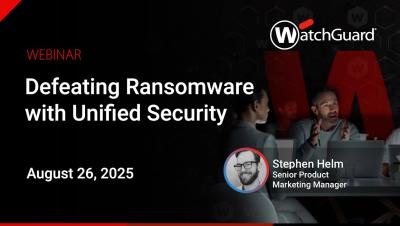
Defeating Ransomware with Unified Security

Ransomware is getting smarter, so your security better be, too. The old playbook of scattered tools and siloed defenses no longer cuts it. Every business needs to connect the dots to stay ahead. In this webinar, we’ll show you how bringing together SASE, XDR, NDR, and automation under a unified platform creates a powerful security force that works with your team, not against it.

The future of managed cybersecurity: MSPs' new role in 2025

Cybersecurity in 2025 is marked by a more complex, dynamic, and decentralised environment. Threats have not only become more sophisticated but also act faster, supported by technologies including artificial intelligence and a fragmented geopolitical context. Against this backdrop, the latest IDC report* on the state of cybersecurity in 2025 brings to the table a paradigm shift in how protection is provided, with what resources and under what structures.

68% of cyberattacks start with stolen credentials

More than 16 billion passwords, cookies and tokens were recently exposed in one of the largest data breaches in history. The scale of the theft, with data from services including Google, Apple, Facebook, Amazon and Microsoft, makes one conclusion clear: credentials are the first step in compromising critical data.