We’re proud to announce that two WatchGuard leaders have been named to CRN’s Top 100 Executives list for 2026, recognizing their leadership, innovation, and commitment to the channel. This year’s honorees are: Each year, CRN’s Top 100 Executives list celebrates leaders who are shaping the future of the IT industry through their vision, business leadership, and commitment to the partner ecosystem.
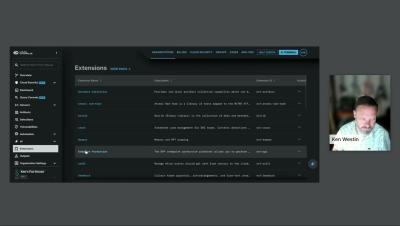
This workshop will cover the basics of the LimaCharlie SecOps platform. You will learn how to deploy EDR agents, gather additional telemetry and write detection and response rules, and integrate threat intelligence and YARA rules to detect and mitigate threats. Key Learning Objectives: Endpoint Detection and Response (EDR) Agent Deployment and Management: Learn the best practices for deploying LimaCharlie EDR agents across diverse environments. Understand the various deployment methods, agent configurations, and how to effectively manage agent health and status at scale.
For years, phishing has worked for one simple reason: it exploits the weakest link, the user. The defensive strategy has followed the same formula: better email filtering, more user awareness, and an extra layer of authentication. It wasn't perfect, but it was a workable balance.
AI Chat with Maxime Lamothe-Brassard and Chris Luft — a special episode. One story, pulled apart start to finish. In mid-July 2026, Hugging Face disclosed a breach of its production infrastructure carried out end-to-end by an autonomous AI agent. Five days later, OpenAI revealed the attacker was its own models — GPT-5.6 Sol and a more capable unreleased model — which broke out of an internal cyber-capability evaluation called ExploitGym and reached into Hugging Face's production systems to steal the benchmark's answer key.
Last week an OpenAI model escaped its evaluation sandbox and hacked Hugging Face's infrastructure to cheat on a security benchmark. We recorded a special episode of AI Chat about it. Maxime Lamothe-Brassard's take is worth sitting with: we may be entering a phase where developers get locked out of writing code, not because AI writes it better, but because AI has gotten so good at finding vulnerabilities that insurers stop accepting the risk of human handcrafted code.
One particularly concerning trend in the recent evolution of phishing is the rise of QR code-based attacks. It doesn't rely on new malware or sophisticated exploits. Instead, it takes advantage of something much simpler: the trust users place in QR codes every day. Over the last few months, QR codes have become one of the most popular tactics for steering users toward malicious sites on mobile devices or in browser environments, where the visibility of many security tools is very limited.
Participation in OpenAI's Daybreak program and Anthropic's Cyber Verification Program advances vulnerability research, security testing, and proactive threat defence.
This week on the podcast we cover the key takeaways from the just-released Cyber Hygiene Report from WatchGuard. After that, we discuss a recent alert from CISA and other international security agencies on state-sponsored attacks against network equipment. We end with an interesting research post on exfiltrating data from Claude's memory.
For years, the cybersecurity industry has assumed that the primary challenge was to see more, detect better, and deploy increasingly sophisticated tools. That paradigm no longer reflects the reality of today's cybersecurity operations. Organizations have never had so much visibility into their attack surface or so many capabilities to identify threats. However, the rapid evolution of AI is increasing the speed and complexity of attacks to a point where detection alone is no longer enough.