Security | Threat Detection | Cyberattacks | DevSecOps | Compliance

Beyond the PHP Patch: How Security Leaders Are Responding to a Week of Critical Incidents

From PHP vulnerabilities to supply-chain compromises, security teams are being forced to make difficult decisions about patching, exposure, and business continuity. Here’s the response from security leaders on critical incidents and the learnings on the front lines. Some days in cybersecurity are busier than others, and then there are days when everything seems to go wrong at once…like October 21.


PHP2Shell (CVE-2026-109618 & CVE-2026-109619): Pre-Auth RCE in PHP Core Puts Web Servers at Risk

Two critical vulnerabilities in the PHP core, tracked as CVE-2026-109618 and CVE-2026-109619 and nicknamed PHP2Shell, let an unauthenticated attacker run commands on servers that use an affected PHP build to handle web requests. PHP released fixes on October 21, 2026, a day after details leaked online. Public proof-of-concept code followed within hours, and exploitation attempts were seen as early as October 17. AppTrana customers have been protected against PHP2Shell.

PHP2Shell: Critical PHP Vulnerabilities Enable Unauthenticated Remote Code Execution

On October 21, 2026, the PHP development team released emergency security updates addressing two critical vulnerabilities, CVE-2026-109618 and CVE-2026-109619, collectively referred to by researchers as PHP2Shell. Both vulnerabilities carry a CVSS v4.0 score of 9.2 (Critical Severity) and can allow an unauthenticated attacker to execute code with the privileges of the affected PHP worker process.

PHP2Shell (CVE-2026-109618 and CVE-2026-109619): Why Patching Alone Isn't Enough

Two critical vulnerabilities in PHP, CVE-2026-109618 and CVE-2026-109619, allow attackers to execute code on vulnerable web servers without authentication. PHP released fixes on October 21, 2026, including versions 8.5.12, 8.4.27, 8.3.36 and 8.2.35. But patching your servers is only part of the response. Organizations must also understand what their websites delivered to customers during the exposure window, including scripts served by third-party vendors whose infrastructure may have been vulnerable.

Responding to php2shell PHP Vulnerability When You Don't Know What Secrets Are Deployed

On Oct. 21, 2026, PHP fixed a vulnerability named php2shell by Calif. Pre-auth RCE under default configurations, confirmed on common CMS, webmail, e-commerce, file sharing, and database administration applications. A PHP server also stores and uses credentials, so this is a secret theft vector.

PHP2Shell: the fix is a runtime upgrade, not a code change

On October 21, 2026, PHP released 8.5.12, 8.4.27, 8.3.36, and 8.2.35 to close two critical remote code execution flaws in the PHP runtime. Both are rated CVSS v4.0 9.2. Together they go by the name “PHP2Shell.” The flaws sit in PHP itself, not in any application built on it. A secure codebase running on an affected PHP build is still exposed. That makes this an inventory problem first and a patching problem second.

Cloudflare Responds to Critical PHP RCE Vulnerabilities: Why WAF Enforcement Matters

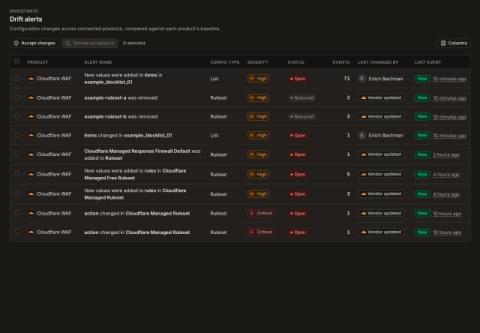
Two critical PHP vulnerabilities have been disclosed, potentially exposing millions of web servers to remote code execution. Cloudflare has already responded by deploying emergency WAF protections. For Reach customers using Cloudflare WAF, Reach Drift automatically detected the new rules and confirmed they were enabled and configured to block malicious traffic.

Arctic Wolf Labs: Finding, Prioritizing, and Patching PHP2Shell Exposure

On Tuesday, October 20, threat actors gained advance visibility into two critical PHP vulnerabilities after details leaked ahead of the planned disclosure, accelerating the race between defenders and attackers. The flaws are tracked as Common Vulnerabilities and Exposures (CVE) identifiers CVE-2026-109618 and CVE-2026-109619. Together they’re known as PHP2Shell. Both carry a 9.2 rating on the Common Vulnerability Scoring System (CVSS) version 4.0 scale.

Critical PHP Vulnerabilities (CVE-2026-109618 & CVE-2026-109619)

On October 20, 2026, the PHP security team issued an advance security advisory regarding two critical vulnerabilities, CVE-2026-109618 and CVE-2026-109619, affecting core PHP source code. Both vulnerabilities carry a critical-severity CVSS v4.0 score of 9.2 and could potentially allow unauthenticated remote code execution (RCE) on affected servers. The official patched PHP releases are now available.

Building "php2shell" detections before coordinated disclosure

We recently collaborated with OpenAI, PHP, and a number of other organizations to respond to a pair of serious remote code execution vulnerabilities in PHP that are likely to impact the majority of the world's public web servers. PHP underpins a large part of the web, powering content management systems, online stores, and business applications. Its security matters to vital services that millions of people and organizations rely on daily.