Security | Threat Detection | Cyberattacks | DevSecOps | Compliance

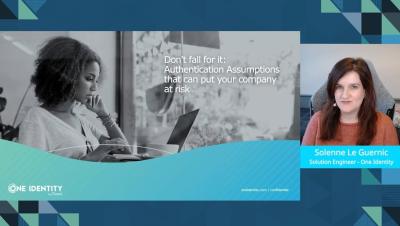
Don't fall for it: Five authentication assumptions that can put your company at risk

Myths have always floated through the cybersecurity sphere, and if you don’t address them, they can invite risk to your organization. Join solution engineers Solenne Le Guernic and Grant Tackett to dispel common authentication assumptions that act as landing lights to cybercriminals. Explore the ways OneLogin can mitigate risk, promote productivity and ensure secure, flexible security for all users – no matter the device, the user or the value of the accessed asset.

The enigma of Entra ID security and management - and how Active Roles can help

Active Directory (AD) officially reaches its quarter-century this year, after its late-1990s preview and full release with Windows Server 2000. That’s over 25 years of providing administrators with tools to manage permissions, endpoints and access for network-based resources and objects. In that time, it’s grown to become the choice of around 90% of the Global Fortune 1000s.

What is attestation and why is it important?

Managing an enterprise-level Active Directory (AD) means enterprise-grade volumes of identity accounts. Naturally, operations at this scale come with high complexity and call for intensive resources to maintain control. Manual errors can creep in as the business expands, leading to increased cybersecurity risks and vulnerabilities.

AI in IAM: Automate the monotonous tasks, not the vital ones

Lately, the common theme in emerging identity security technology is AI. It’s all anyone wants to talk about. All of us in the IAM business have been scurrying to find a way to tell our customers and the market that, yes! We have AI! We've had it all along! If that were so obviously true, why isn’t it more broadly known? As an identity security technologist, I’ve experienced the growing pains of AI in IAM. I recently read an interesting essay by a science fiction author.

IT & Security use cases solved with 1Password Extended Access Management

BYOD and SaaS adoption have been growing for years, and today, employees expect seamless access to the tools they need – wherever they work, on whatever devices they choose. They’ve taken control of their work environment, selecting applications and devices that best suit their needs, often outside of IT’s visibility. This shift has created a significant security challenge: traditional IAM, IGA, and MDM solutions were built for a controlled, managed environment.

Why Manufacturing Organizations Need Privileged Access Management for IIoT Security

Manufacturing organizations need Privileged Access Management (PAM) for Industrial Internet of Things (IIoT) security because it protects critical systems and devices by ensuring that only authorized users have access. IIoT refers to a network of connected devices that work together to collect and analyze data across industrial sectors to improve operational efficiency. As IIoT becomes increasingly integral to manufacturing, securing these connected systems is more important than ever.