Security | Threat Detection | Cyberattacks | DevSecOps | Compliance

How to Identify and Strengthen Weak SSL

Your website or application must be set up within communications networks in order to be accessible to users. Each connection point to an external environment is a possible attack vector that makes up your attack surface. In order to encrypt traffic between your site and your users, you can set your system up with an SSL certificate that uses SSL/TLS protocols to secure traffic.

The New Network Dictionary: AvidThink Explains SASE, SD-WAN, SSE, ZTNA, MCN, and NaaS

The enterprise networking and security market has seen no end to terms and acronyms. SASE, of course, is chief among them, but let us not forget SD-WAN, SSE, ZTNA, and Multi-Cloud Networking (MCN). Then we get into specific capabilities like CASB, DLP, SWG, RBI, FWaaS, and micro-segmentation. This alphabet soup of jargon can confuse even the most diligent and capable CISOs and CIOs, especially when vendors continually redefine and reclassify each category to fit their needs.

Securing your cloud networks: Strategies for a resilient infrastructure

What exactly is resilience? According to the U.S. National Institute of Standards and Technology, the goal of cyber resilience is to “enable mission or business objectives that depend on cyber resources to be achieved in a contested cyber environment.” In other words, when you’re at odds with cybercriminals and nation-state actors, can you still get your job done? If not, how quickly can you get back up and running?

Why Should SecOps Pay More Attention to Network Data?

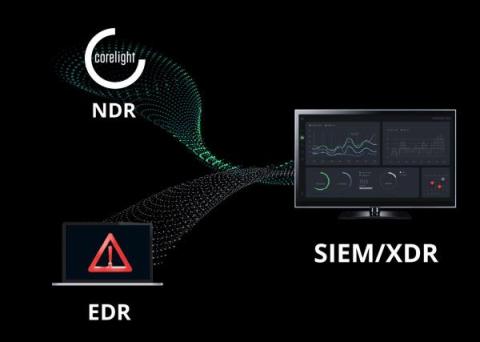
Trying to convince SecOps teams they need more data is like trying to convince a drowning person they need more water. SecOps teams are so overwhelmed they can’t even respond to 67% of the alerts they receive. On average, SecOps teams receive 4,484 alerts per day and spend over three hours per day manually triaging the alerts, costing $3.3 billion annually in the US alone.

The Definitive Case for a Managed Firewall: Preserving Your Business in the Information Age

With on average, 30,000 websites being hacked daily the need for stout cybersecurity measures has become more critical than ever. In today’s connected business landscape, as data flows effortlessly between networks and the digital realm, the need for a comprehensive cybersecurity strategy is underscored by the fundamental importance of a managed firewall.

How to Enhance Your Network Security Strategy

With the transition to the cloud and remote work, some organizations are undervaluing network security. However, network vulnerabilities and threats still require attention. Enterprises should not forgo the core capabilities required to secure the network from security threats. In this blog post, we delve into SASE, a converged, cloud-delivered network and security solution, which protects the network while ensuring high performing connectivity.

Cryptography and network security: The quick and short guide

There is an old joke among cybersecurity professionals that the only way to truly secure your data is to keep it on a machine without connection to power or the internet… oh, and put it in a sealed cave. And even then, it is not 100% secure. In today’s world, it’s a pretty safe assumption that none of our data is truly secure.

Comcast: 9 out of 10 Attempts to Breach Customer Networks Start with a Phish

The latest data from Comcast Business’ analysis of over 23.5 billion cyber attacks on their business customers shows the importance and role of phishing in attacks. Over the years there has been a consistent mantra, where everyone agrees that “90-something” percent of cyber attacks start with phishing. There have been plenty of sources that corroborate this using percentages in the 90th percentile, but the overall message is phishing is your greatest Initial Access tactic.

17 Best Cloud WAAP & WAF Software in 2023

A web application firewall is a security software that observes and filters HTTP/HTTPS traffic between a web application and the internet. While this has been available for decades, with the evolution of the threat landscape, WAFs have also added additional capabilities to protect not only web apps but also APIs against a range of attacks, including DDoS and bot attacks. So, the category has evolved and is currently called Web Application and API Protection (WAAP).