Security | Threat Detection | Cyberattacks | DevSecOps | Compliance

40 Infosec Metrics Organizations Should Track

In today’s data-driven world, CISOs and senior leadership need to prove that their security programs mitigate risk. Just like grades theoretically quantify how well students understand material their teachers present, cybersecurity metrics quantify your security controls’ effectiveness. As the threat landscape becomes more complex, security teams struggle to identify the metrics that best showcase their value.

Strengthen SOC Defenses with Native UEBA in Splunk Enterprise Security

At.conf25, we announced how Splunk Enterprise Security (ES) has transformed to today’s AI-powered SecOps platform—unifying industry-leading technologies across SIEM, SOAR, User and Entity Behavior Analytics (UEBA), threat intelligence, and detection engineering with purpose-built AI across the entire Threat Detection, Investigation, and Response (TDIR) workflow—empowering Security Operations Centers (SOCs) to end analyst fatigue, deliver faster security outcomes, reduce risk, and build r

Using AI in Security Operations: A Practical Checklist for the Modern SOC

AI is transforming how security operations centers (SOCs) work, but the hype can outpace the reality. You don’t need to build custom models or deploy cutting-edge platforms to benefit. Chances are, you already have AI-powered capabilities in your SIEM, SOAR, or security data platforms. The question is: Are they doing anything useful? This practical playbook lays out six key priorities to increase productivity and effectiveness while maintaining control.

Five Essential Strategies to Combat Phishing Threats

Phishing threats remain one of the most common and effective attack methods. Research shows it contributes to over 34% of confirmed breaches. The financial impact is significant as well, with credential-related breaches averaging $4.76 million per incident. And despite years of security awareness training, nearly a third of employees still click on simulated phishing emails. Why does phishing work so well? Attackers exploit gaps in visibility, speed, and user behavior.

Rogue AI Agents In Your SOCs and SIEMs - Indirect Prompt Injection via Log Files

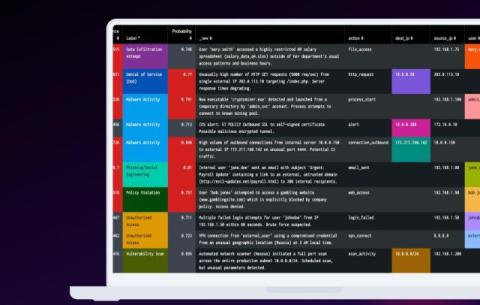
AI agents (utilizing LLMs and RAG) are being used within SOCs and SIEMS to both help identify attacks and assist analysts with working more efficiently; however, I’ve done a little bit of research one sunny British afternoon and found that these agents can be abused by attackers and made to go rogue. They can be made to modify the details of an attack, hide attacks altogether, or create fictitious events to cause a distraction while the real target is attacked instead.

How to Operationalize Enterprise Security Content Update (ESCU) Content

The Splunk Enterprise Security Content Update (ESCU) app is a powerful resource developed by the Splunk Threat Research Team. It provides out-of-the-box detection analytics mapped to the MITRE ATT&CK framework and tailored to various platforms such as Windows, Linux, and cloud environments. While installing ESCU is straightforward, operationalizing the content - meaning tuning, enabling, and maintaining it for real-world use - requires a few deliberate steps.

Where Online Analytical Processing (OLAP) Overlaps With Security Operations

Imagine security data and analytics like a carnival’s hall of mirrors. From convex mirrors that show you a shorter, squatter version of something to the concave mirrors that show a highly magnified image, you see the same object in multiple ways. Every view gives you a different insight and provides a unique vantage point. Online Analytical Processing (OLAP) systems are different mirrors that allow security teams to create focused analytics models for different insights about your security posture.

Best Features to Find in Industrial Temperature Data Loggers of Important Environments

Industrial datalogging equipment, including temperature data loggers, is a necessary component in the pharmaceutical, food processing, and industrial manufacturing sectors. These industries' temperature monitoring is non-negotiable in terms of safety, compliance, and efficiency of operations. The precision tools are built to only keep track and capture temperature readings over a period to allow the teams to spot the anomalies prior to them developing into expensive issues.

Advanced Persistent Threat: What They Are and Why They Matter

Nearly everyone has had “that cold,” the one where most symptoms have resolved except that lingering cough. The cough can continue for weeks or months, all while you feel mostly well across the board. In cybersecurity, an advanced persistent threat (APT) is your IT environment’s lingering cough, albeit a much more damaging one. An APT stealthily gains initial access to your company’s systems and networks, then hides within them to complete objectives.