Security | Threat Detection | Cyberattacks | DevSecOps | Compliance

What Is Software Supply Chain Security?

Most software today isn’t developed entirely from scratch. Instead, developers rely on a range of third-party resources to create their applications. By using pre-built libraries, developers don’t need to reinvent the wheel. They can use what already exists and spend time on proprietary code, helping to differentiate their software, finish projects quicker, reduce costs, and stay competitive. These third-party libraries make up part of the software supply chain.

Stranger Danger: Your JavaScript Attack Surface Just Got Bigger

Building JavaScript applications today means that we take a step further from writing code. We use open-source dependencies, create a Dockerfile to deploy containers to the cloud, and orchestrate this infrastructure with Kubernetes. Welcome, you're a cloud native application developer! As developers, our responsibility broadened, and more software means more software security concerns for us to address.

Detecting Active Directory Kerberos Attacks: Threat Research Release, March 2022

The Splunk Threat Research Team recently developed a new analytic story, Active Directory Kerberos Attacks, to help security operations center (SOC) analysts detect adversaries abusing the Kerberos protocol to attack Windows Active Directory (AD) environments. In this blog post, we’ll describe some of the detection opportunities available to cyber defenders and highlight analytics from the analytic story.

The Kroll Intrusion Lifecycle: Threat Actor Behavior from a Visual Perspective

Across the thousands of cyber incidents that Kroll’s global team investigates every year, our experts are constantly on the hunt to spot established patterns of threat actor activity—and to discover new ones. In observing attack patterns, our experts discovered that threat actors like repeatability. Certain actors can be predictable not only in how they attack, but also in the tools and tactics they use once they have access.

Why Are Low-Code Platforms Becoming the New Holy Grail of Cyberattackers?

Why Are Low-Code Platforms Becoming the New Holy Grail of Cyberattackers? Low-code/no-code platforms for enterprise are booming. With more and more critical business assets now stored and handled by these platforms, it is essential to understand that low-code often leads to a large attack surface. This article will explore low-code/no-code from an attacker’s perspective to better understand their potential weaknesses and showcase why they are becoming the new holy grail for cybercriminals.

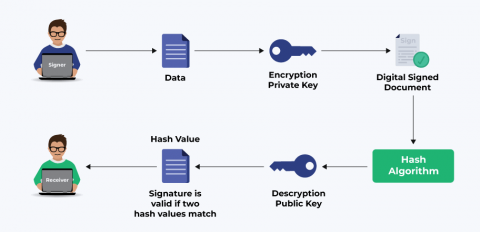
PKI Management: Role of Certificate in PKI, Components, PKI Lifecycle Management

Everyday life depends on the internet, from online banking to shopping online in this digital world. However, with the increase in the use of networking, cyber-crimes have also increased, which results in the stealing of sensitive data and the spreading of malicious software through unnatural links. Here comes the importance of Public Key infrastructure. PKI is based on data encryption which secures online data from cyber-attacks.

A Partnership Protecting Critical Infrastructure: Centripetal and Dynics

Threat activity today is incredibly high, and industrial infrastructure is a primary target. Centripetal and Dynics are partnering to combine IT and OT expertise to better protect critical infrastructure and industrial control systems across the United States.