Security | Threat Detection | Cyberattacks | DevSecOps | Compliance

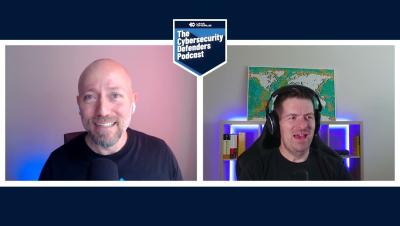
Cybersecurity: From Government to Consumer Unveiling Key Meta Patterns for the Future #podcast

Explore the evolving landscape of cybersecurity in this insightful video, where we delve into its pervasive importance across government services, healthcare, consumer realms, and beyond. Join us as we highlight the heightened attention and investment in cybersecurity, recognizing meta patterns such as agility, modularity, and enhanced interoperability among cyber technologies. Discover how these overarching themes shape the future of cybersecurity strategy and implementation.

Meet EO 14028 requirements with Datadog Log Management, Cloud Workload Security, and Cloud SIEM

As of August 2023, only 3 out of 23 US government agencies were compliant with Office of Management and Budget (OMB) requirements for log management and security observability. These requirements are outlined in M-21-31, a 2021 memorandum that was issued following Executive Order 14028 on improving national cybersecurity. Until all of these agencies implement the new requirements, the federal government’s ability to fully detect, investigate, and remediate cybersecurity threats will be constrained.

Mining Operations: Critical Cybersecurity Threats & Trends Revealed

Cybersecurity professionals often point out that threat actors do not differentiate when choosing a victim. To an attacker, a hospital is as useful a target as a law firm or even a mining operation. After all, a mining company has the same attributes that make it as interesting as any other target: proprietary data and customer information, and it must stay in operation. All of which an attacker can exploit for financial gain.

Hunting For Integer Overflows In Web Servers

Allow me to set the scene and start proceedings off with a definition of an integer overflow, according to Wikipedia: To be inclusive of all audiences here, in software security we’ve got sources (typically user input) and sinks – where that input (the data) ends up. In order to overflow something (e.g. an integer overflow) we clearly need some way to be able to do that (think pouring water from a kettle into a cup), and that’s the source (us using the kettle) to overflow the cup.

Exploring Cybersecurity in the Financial Sector: The Role of DORA and ThreatQ

As the Principal Threat Intelligence Services Engineer and Trainer at ThreatQuotient, my role puts me in front of a diverse range of clients and partners across various industries, offering me a unique perspective on the impact of regulatory frameworks on cybersecurity. Through our European Union (EU) based clients and partners, I have seen the emergence of the need to be compliant with the Digital Operational Resilience Act (DORA).

LAN Manager authentication level best practices

LAN Manager (LM) authentication level is a security setting that determines how Windows systems authenticate network connections. It is a legacy authentication protocol developed by Microsoft for use in older versions of Windows network operations. There are three main protocols involved in LAN Manager Authentication: The LAN Manager Authentication Level setting allows you to choose which protocols your system will use or accept for authentication.