Security | Threat Detection | Cyberattacks | DevSecOps | Compliance

Securing the AI Revolution: Introducing Cloudflare MCP Server Portals

Large Language Models (LLMs) are rapidly evolving from impressive information retrieval tools into active, intelligent agents. The key to unlocking this transformation is the Model Context Protocol (MCP), an open-source standard that allows LLMs to securely connect to and interact with any application — from Slack to Canva, to your own internal databases. This is a massive leap forward.

ASPM Explained: The New Standard for Enterprise-Grade App Protection

Application Security Posture Management (ASPM) is a unified intelligence layer that transforms scattered security data into actionable business insights. Why should you care about this new security approach when you already have a working structure in place? To understand this, let’s first look at the security approach that enterprises usually follow and why it is dated.

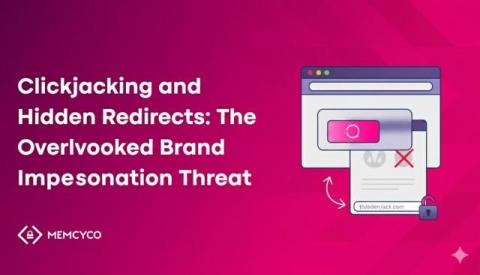
Clickjacking: What it means for 1Password users

This blog details how 1Password has addressed clickjacking in the latest version of our browser extension (version 8.11.7). We have no indication that this class of vulnerability directly puts 1Password’s systems at risk. Clickjacking is a technique where a malicious or compromised webpage visually disguises or overlays elements of a page or browser extension, like the autofill menu, so that a user unintentionally clicks on them.

Investigating the Oyster Backdoor Campaign and its Targeting of IT Professionals

BlueVoyant investigated the latest Oyster malware attacks, delivered in a widespread campaign targeting IT professionals by impersonating legitimate IT tools. The campaign was originally discovered by outside researchers, but when BlueVoyant’s SOC observed suspicious behavior in a client environment within the healthcare sector, the team, including the Threat Fusion Cell (TFC), decided to delve deeper.

DNS Tunneling: The Blind Spot in Your Network Security Strategy

The Domain Name System (DNS) is a critical component of internet infrastructure, responsible for translating human-readable domain names into IP addresses. However, the ubiquitous nature and often-overlooked security aspects of DNS make it a prime target for malicious actors. This blog post investigates the tools used for data exfiltration over DNS, the techniques involved, and the countermeasures to mitigate these threats.

The Role of Staffing Services in Engineering Success

Every company knows the difficulty of finding the right talent. In engineering, the challenge is even greater. Technical projects demand professionals with not only strong credentials but also specialized expertise that fits a specific industry. For businesses trying to complete projects on time and within budget, the ability to connect with the right people makes all the difference. This is where tailored staffing services come in.

SAP Commerce Cloud Implementation: A Practical Guide with Qnovate

Driving omnichannel excellence requires a strategic SAP Commerce Cloud implementation that seamlessly integrates front-end experiences with back-end operations. Qnovate enables enterprises to deploy scalable, cloud-native commerce ecosystems, leveraging modular architectures.

Basics of Filing a Claim in California

When someone is injured due to another person's negligence, the first step is usually filing a personal injury claim. In California, the process begins with identifying who is legally responsible for the injury-this could be a driver, property owner, employer, or even a product manufacturer. Victims must then notify the at-fault party's insurance company and provide detailed information about the accident. This often includes medical records, accident reports, witness statements, and other supporting evidence.

Comprehensive cybersecurity guide: Understanding 9+ cyberattack types

Every moment you browse, click, or connect, unseen adversaries are also probing. In today’s hyper-connected world, cyberattacks are no longer fringe threats; they’ve become relentless forces reshaping how we live, work, and protect our most prized digital assets. From stealthy phishing emails that mimic trusted colleagues to sophisticated ransomware schemes locking down entire networks, cyber risks now come in many guises.