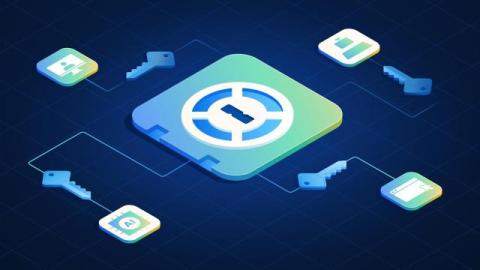
AWS IAM Policy Simulator is a testing tool that helps teams evaluate whether an IAM policy allows or denies specific AWS actions before those permissions are applied in production.
This year's event made it clear that as AI agents scale across enterprises, we must solve ownership, delegation, least privilege, and auditability before production risk grows.
We found 62 live PyPI tokens leaking on public sources, enough to push malicious code to 125 packages with 25,000 monthly downloads. We reported them to PyPI, which revoked every one. Here's how we decoded the macaroons and checked which still worked.
On Jun 24, 2026, the codfish/semantic-release-action GitHub Action was compromised through an imposter commit attack. An attacker force-pushed two malicious commits into the repository and repointed sixteen tags to them, including the floating major version tags v2, v3, v4, and v5. Any workflow referencing the action by one of those tags will pull and run the attacker's code on its next CI run.
In our previous article, From Vulnerability Management to Continuous Security Operations, we explored how organizations are moving beyond traditional vulnerability management toward a model built on continuous visibility, continuous prioritization, and continuous action. But that evolution raises an important question: how do security teams sustain this model at scale? For years, the cybersecurity industry focused on visibility.
For years, VPNs have been the standard for secure remote access. But as organizations embrace hybrid work, cloud applications, and distributed workforces, traditional VPN architectures are struggling to keep pace with today's security and operational demands. Legacy VPNs often grant broad network access, increasing the attack surface and creating challenges for IT teams tasked with securing users, applications, and data.
A lot of defense contractors are in the same spot right now. A solicitation lands, the DFARS language gets stricter, someone asks whether the company is “CMMC ready,” and the room gets quiet because nobody is fully sure what that means in operational terms. Usually, the first instinct is to gather policies, dust off the old SSP, and start checking controls in a spreadsheet. That's not enough anymore. CMMC doesn't reward paper maturity.
Backups are more common than you think. Every day, you probably rely on one without realizing it, whether it’s a coworker who covers your shift or that spare tire tucked in the bottom of your trunk for a flat. Backup and recovery plans apply to nearly everything in daily life. The same logic applies to your business, but the stakes are far higher. Data loss can happen in a heartbeat, and the companies that survive are the ones that planned ahead.
ShadowPad, a sophisticated modular malware, has emerged as a significant cybersecurity threat. Attributed initially to Chinese state-sponsored threat actors (APT41), this malware has evolved into a shared tool among various APTs. Its highly customizable nature allows attackers to adapt ShadowPad to specific targets, making it a versatile and persistent threat.
Security teams are drowning in findings, not because scanners miss things, but because nothing confirms which ones an attacker could actually reach. Seemplicity AI Analysts run the investigation themselves, checking runtime configuration, network reachability, and exploit conditions for each finding, and re-rank your backlog by confirmed exploitability. What rises to the top is backed by evidence. What drops down has been checked and reasoned out.