Security | Threat Detection | Cyberattacks | DevSecOps | Compliance

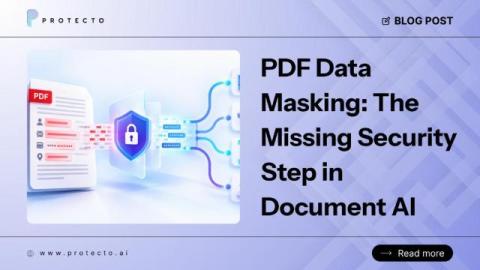
PDF Data Masking: The Missing Security Step in Document AI

PDF data masking is the security step most document AI stacks skip. Most companies building RAG pipelines, agentic workflows, or document intelligence systems have secured the model, the vector store, and the API. They haven’t secured the step before any of that: the data inside the document itself, before it enters the pipeline. That gap shows up everywhere documents meet AI.

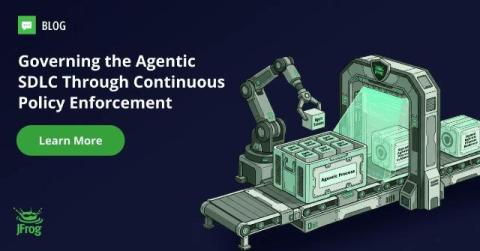
Governing the Agentic SDLC Through Continuous Policy Enforcement

The way software gets built has changed faster than the standards that govern it. AI agents now create pull requests, select dependencies, refactor codebases, interpret test failures, and execute infrastructure changes across the entire Software Development Life Cycle (SDLC). AI agents are autonomous team members, but unlike human engineers, they are ephemeral: their reasoning, decisions, and tool calls vanish the moment the session ends. You can’t hold an ephemeral process accountable.

The OIT Enterprise: Where IT, OT, and AI Come Together

In the first three parts of this series, I looked at how Enterprise IT developed, how Operational Technology followed its own path, and how artificial intelligence is changing both. Enterprise IT connected the systems that run the business, while OT digitized and automated physical operations. Over time, digital transformation connected more of those systems and made operational data available across the enterprise.

What are the lessons of Cybersecurity Awareness Month?

This year's National Cybersecurity Alliance Cybersecurity Awareness Month theme, “Don’t make it easy for them,” asks us to look beyond today’s cyber risks by building good habits into our everyday routines. Practicing those habits consistently can make life harder for cybercriminals. While technology continues to transform how we work and communicate, one thing remains unchanged: Strong cybersecurity starts with people.

How to detect non-CVE vulnerabilities that standard scanners miss

If your application security program only tracks known Common Vulnerabilities and Exposures (CVEs), you’re probably missing a large share of your real risk. Across the Detectify platform, 75% of the vulnerabilities in our test catalog and 99% of those we discover in customers’ assets are non-CVE vulnerabilities. That makes public disclosures a poor measure of coverage on a modern attack surface. Below, we look at why so many vulnerabilities never get a CVE and how Detectify finds both kinds.

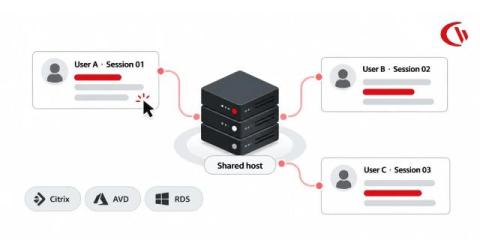
Multi-Session User Tracking in Citrix & Azure Virtual Desktop: Session-ID Mapping vs. Device Logging

In 2026, enterprise computing will be largely consolidated and centralized, and organizations will be shifting away from the one-user-per-PC model towards shared, multi-user virtualization technologies like AVD, Citrix Virtual Apps and Desktops, and Microsoft Remote Desktop Services (RDS).

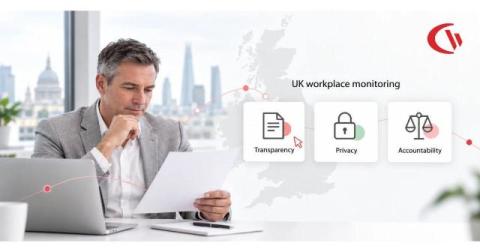
UK Employee & Workplace Monitoring Laws: The 2026 Employer Compliance Guide

In the UK, workplace monitoring rules are changing quickly as the Information Commissioner’s Office (ICO) releases new guidance following the passage of the Data (Use and Access) Act 2025. Since the Act came into effect, UK companies have had to comply with strict legal limitations on employee privacy because of the ICO’s guidance concerning work-related monitoring. What should be done to ensure that employee monitoring laws are valid?

GitProtect 2.5.0: Lightweight Replication, Microsoft Graph API Support, and Enhanced Restores

In the latest 2.5.0 release, we’ve improved copy replication to execute faster and use less resources. We also optimized Microsoft 365 backups with Graph API support, and made restore experience across multiple workloads smoother. Read on to learn about all enhancements in the 2.5.0 release of GitProtect.