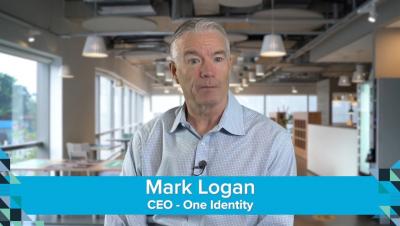
Darren Thomson on Cyber Insurance
Darren Thomson, VP of Product Marketing at One Identity, discusses cyber insurance, including premiums, addressing issues and how One Identity helps clients with cyber insurance success.


Learn how ING’s focus on governance allowed them to standardize workflows and automate provisioning for over 90,000 accounts
To learn more, visit: https://www.oneidentity.com/products/active-roles/
When it comes to law enforcement crime investigations, there is a maxim of, “follow the money”. This broadly means that if you can follow the money trail, it will eventually lead you to the perpetrator of the crime. In today’s modern society, money has now become a series of binary ones and zeros that are transferred between bank accounts without any real effort on either party, and cybercriminals are fully aware of how easy, and fragile, this process is.
Crypto scams are skyrocketing: In 2022, the FBI tracked an 183% year-over-year increase, driving $2.57 billion in losses. Last week, the popular YouTube channel Linus Tech Tips (LTT for short) – and two associated channels – became the latest crypto scam victim and unsuspecting accomplice.
Trustwave has inked a channel partnership deal with Intelisys, one of the nation's leading providers of technology services and solutions, that will allow its network of more than 1,700 sales partners to offer Trustwave security consulting, managed detection and response (MDR), threat hunting, co-managed SOC, database security, and email security to their client base.