CTI Roundup: FBI and CISA Issue Royal Ransomware Warning
A joint FBI and CISA advisory on Royal ransomware, Sharp Panda’s new malware variant, and an update on IceFire ransomware.


A joint FBI and CISA advisory on Royal ransomware, Sharp Panda’s new malware variant, and an update on IceFire ransomware.
Chat Generative Pre-trained Transformer (ChatGPT) is now available on the official Google Chrome store as a browser extension, giving you easy access to this sophisticated chatbot. How exciting does that sound? Read the full story here.
Another day, another cyber espionage campaign exploiting two legitimate and well-known cloud services to deliver the malicious payload. Once again, this campaign was unearthed by researchers at Sentinel One, and it is aimed to distribute the Remcos Remote Access Tool (yet another example of a remote control tool used for malicious purposes) through the DBatLoader to target predominantly organizations in Eastern Europe.
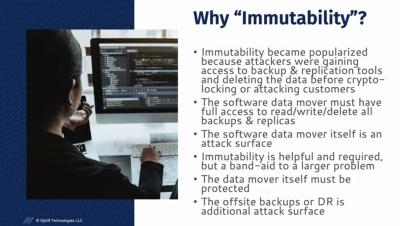
Are you still relying on legacy backup systems to protect your business from cyber attacks? If so, you might want to think twice. Cyber attacks have become so common that 98% of security and IT leaders reported that they dealt with at least one in the last year. Relying on legacy backups as a defense against cyber attacks is not only ineffective but also obsolete in today's rapidly evolving threat landscape.
In early March, the SANS Institute, whose mission is to empower cybersecurity professionals with the practical skills and knowledge to make the world a safer place, shared some insightful findings based on their survey on ransomware and malware intrusions in 2022. The survey included participants in various roles and industries from organizations worldwide of all sizes. “In this survey, we wanted to understand what the past year looked like for our respondents.
Trustwave SpiderLabs “noted” in Part 1 and Part 2 of our OneNote research that OneNote has been used as a malware delivery mechanism now we will shift gears and focus on several OneNote decoy notes SpiderLabs has discovered that deliver malware families like Qakbot, XWorm, Icedid, and AsyncRAT. While the malware payload can change, the techniques have generally been the same.