
Security | Threat Detection | Cyberattacks | DevSecOps | Compliance

Nearly Half of Mid-Market and Enterprise Organizations Have Experienced Four or More Ransomware Attacks in the Last Year

New data exposes the reality of ransomware attacks today, including their frequency, impact, ransom payment – and the involvement of human error. It’s readily evident that ransomware is only growing as a threat. But a new infographic from ERP Cybersecurity vendor Onapsis covering the state of ransomware provides some context on just how critical the threat is right now: The most shocking stat is that in 81% of attacks, human error was involved in the successful execution of the ransomware.


How to Prevent Malware Attacks from Impacting Your Business

A robust malware prevention and detection strategy is critical to cyber security and cyber resilience today. After all, a single malware infection can inflict serious financial damage — from business disruptions and remediation costs to lasting reputational damage and customer churn. To help, this blog explains the types of malware organizations need to defend against and the common vectors for deployment.

US CERT Alert AA24-242A (RansomHub Ransomware)

On August 29, the Federal Bureau of Investigation (FBI), Cybersecurity and Infrastructure Security Agency (CISA), and the Department of Defense Cyber Crime Center (DC3) issued an urgent advisory warning security teams about known RansomHub ransomware IOCs and TTPs identified through FBI threat response activities and third-party reporting as recently as August 2024. Detailed information about this threat and the associated IOCs and TTPs can be seen in the advisory #StopRansomware: RansomHub Ransomware.

Fewer, High-Profile Ransomware Attacks Are Yielding Higher Ransoms

Analysis of cryptocurrency payments made on the blockchain highlights shifts in the size and frequency of ransomware attacks and may paint a bleak picture for the remainder of the year. Each quarter, blockchain analysis company, Chainalysis, analyzes cybercriminal activity from the perspective of blockchain use to facilitate payments, crypto theft, etc.

Latrodectus Rapid Evolution Continues With Latest New Payload Features

Latrodectus is a downloader first discovered by Walmart back in October of 2023. The malware became very famous due to its similarities with the famous IcedID malware, not only in the code itself but also the infrastructure, as previously reported by Proofpoint and Team Cymru S2. The malware is usually delivered via email spam campaigns conducted by two specific threat actors: TA577 and TA578.

Rubrik and Cisco to Safeguard Data Against Cyberattacks

A Rubrik Zero Labs report found that 66% of IT and security leaders report that data growth outpaces their ability to secure data and mitigate risk. Adversaries are noticing, increasing the sophistication of cyberattacks, and leveraging gaps in coverage to target critical data for destruction, theft, or extortion. As the volume of data continues to grow and exacerbate visibility challenges, organizations must find ways to manage and protect their constantly expanding data.

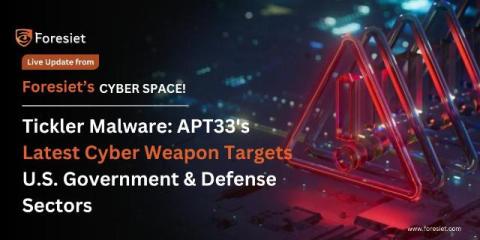
Tickler Malware: APT33's Latest Cyber Weapon Targets U.S. Government and Defense Sectors

In a recent cybersecurity alert, the infamous Iranian hacking group APT33 (also known as Peach Sandstorm and Refined Kitten) has unleashed a new form of malware named "Tickler" to compromise the networks of various organizations across critical sectors in the United States and the United Arab Emirates. This latest campaign, observed between April and July 2024, has primarily targeted government, defense, satellite, and oil and gas industries.

How To Tell if There Is Spyware on Your Laptop

Spyware is a type of malware that can be installed on your device without your knowledge. The main goal of spyware is to spy on you and gather your private information, like passwords or credit card information. Despite spyware being elusive and undetectable at times, you can tell if there is spyware on your laptop by recognizing common signs. Some of these signs include unwanted pop-up ads, slower performance, shorter battery life and redirections on your browser.