Security | Threat Detection | Cyberattacks | DevSecOps | Compliance

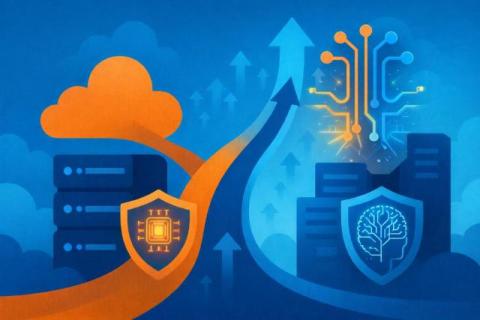
A multi-cloud BCP approach for CPS 230 compliance using CloudCasa

When Amazon Web Services’ US-East-1 region went down recently, a long list of global apps and services went with it. For most companies, that meant a few hours of frustration. For APRA-regulated financial institutions in Australia, an outage like that is something much more serious — a compliance and operational-resilience test under CPS 230, which is now in force as of July 2025.

Difference Between TPM and HSM Security

A Trusted Platform Module (TPM) is a microcontroller designed to increase the levels of protection for computers, smartphones, and other devices through built-in security support that offers the necessary cryptographic operations. TPMs are unlike other software-based security; they provide a hardware-bound security, thus, it becomes nearly impossible for the attacker to tamper with the protected keys and information stored within the TPM.

The Role of AI Security Agents in Modern Exposure Management

AI security agents are reshaping how organizations manage exposure. This blog explores where they deliver the most impact — from smarter prioritization to faster ownership mapping and assisted remediation — and how this shift moves security teams from automation to autonomy.

Zero downtime database migrations: Lessons from moving a live production database

If you've ever been involved in a major database migration, you know just how complex and honestly, nerve-wracking they can be. At Tines, we recently faced the challenge of migrating a customer's dedicated tenant by moving all the customer’s critical workloads running on Tines between two different AWS Regions. All while maintaining 100% system availability.

The Cat's Out of the Bag: A 'Meow Attack' Data Corruption Campaign Simulation via MAD-CAT

In 2024, I published Feline Hackers Among Us? (A Deep Dive and Simulation of the Meow Attack), which explored the notorious Meow attack campaign that had plagued unsecured databases since 2020. That article focused on demonstrating the attack against a single MongoDB instance using a simple Python script. A proof-of-concept that illustrates how devastating misconfigurations can be.

From Neural Networks to Threat Networks: How AI Development is Reinventing Security Intelligence

In the digital age, the landscape of cybersecurity is evolving faster than ever. Threat actors are becoming increasingly sophisticated, while traditional security measures struggle to keep pace. Enter Artificial Intelligence (AI)-an innovation that is transforming security intelligence by converting neural networks, traditionally used for pattern recognition, into threat networks capable of predicting, detecting, and mitigating cyberattacks in real time.

How MSSPs can automate their way to full-spectrum security

The end of October is here, which means it is time to ask: What have you, as a managed service provider (MSP), learned from Cybersecurity Awareness Month? The most critical lesson remains that human behaviour is the single greatest risk and the single greatest opportunity for defence. While no amount of training can eliminate every mistake (which is why we need automation), a security-aware technician acts as the final, critical filter that can spot novel social engineering attacks and enable fast incident response, but only if the back end is hyper-automated, so technicians know about these potential attacks immediately.

The New Attack Surface: How to Break (and Defend) Large Language Models

Large Language Models now automate customer support, write code, classify emails, generate content, and - disturbingly - execute tasks through plugins and agents. Once an AI can act on your behalf, it becomes part of your operational infrastructure, not a toy. OWASP’s Top-10 for LLM Applications formalized the threat landscape, and quietly confirmed what security researchers have been yelling for two years.

70% of IT and security pros say SSO is falling short - Here's how to close the gap

When IT and security teams lack visibility and control over the SaaS apps employees use, the result is wasted spend, unsanctioned access, and compliance failures. Yet 1Password’s research shows that all too often, SaaS usage is evading the tools meant to govern it.