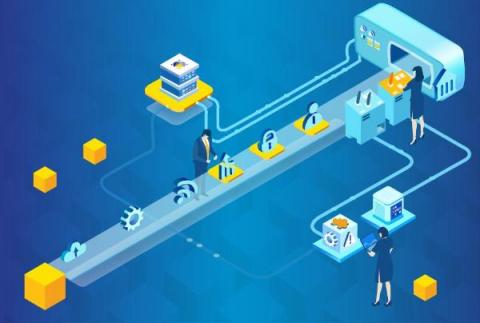
Most cyberattacks originate outside the organization. Numerous articles, vulnerability reports, and analytical materials prove this fact. External attacks are usually carried out based on the following scenario: Obviously, it is impossible to provide protection at all stages of an attack using only one type of protection. It is tough to do without a dedicated team and security solutions like firewalls, intrusion detection, antiviruses and more.
Before the pandemic, most millennials didn’t have a will, let alone a plan for handing over their digital accounts.
In the early days of Styra when we were creating Open Policy Agent (OPA), we had a singular goal in mind: help engineers enforce any policy over any piece of software. We wanted people to be able to write any policy they’d like, whether it be about complex resources managed by Kubernetes or public cloud, APIs routed through gateways or service meshes, data stored in relational or document databases, application deployments controlled by CICD pipelines, and so on.
Cybersecurity threats are on the rise. Over the past year, we’ve observed a 148% increase in ransomware attacks and an 85% increase in phishing attacks targeting remote users. Worse still, these attacks are growing increasingly sophisticated, with threat actors using eight or more vectors in the same attack, often deploying multiple vectors within minutes of one another.
In an increasingly cloud native world, infrastructure as code (IaC) is often the first point of entry into an application. And with technologies such as Kubernetes and Terraform becoming increasingly popular, most app developers will update at least one Kubernetes or Terraform resource at one point in their career.
The SolarWinds attack in late 2020 exposed the data of more than 18,000 businesses and governmental departments – many of which are gatekeepers for the country’s most vital infrastructure. While attacks against the software supply chain aren’t new, they are increasing exponentially.
In 2021, the cybersecurity industry was truly tested. Most notably, we uncovered the deeper fallout from the SolarWinds attacks, combatted the proliferation of advanced ransomware gangs and a surge in vulnerability exploitation, and saw fragile supply chain and critical infrastructure more targeted by attackers than ever. As global cyber defenders, predicting where the broad industry could be heading is a daunting task.
At the beginning of 2021, Emotet was considered to be the world’s most dangerous malware by Europol. The threat was first discovered in 2014 when it was acting as a banking trojan. Over the years, the malware evolved into one of the most relevant botnets in the threat landscape, often used to deliver other threats, such as Trickbot and Ryuk ransomware. Netskope detected Emotet during Oct 2020, using PowerShell and WMI to download and execute its payload.