How to Create an Incident Response Procedure
In the event of a data breach or security incident, having a well-defined incident response procedure can help contain the damage and minimize the risk of future incidents.


In the event of a data breach or security incident, having a well-defined incident response procedure can help contain the damage and minimize the risk of future incidents.
In today’s digital world, data breaches are becoming more and more common. In fact, recent studies found that a large majority of breaches are caused by stolen secrets & credentials, such as API keys. API keys are used to access data and resources from another application or service. They are typically used to connect two applications so that they can share data. For example, if you use a weather app on your phone, that app likely uses an API key to access the Weather Channel’s data.
The cyber insurance market has experienced dramatic changes over the past couple of years – including large payouts from ransomware attacks and the shift to hybrid/remote work – which has had a substantial impact on premiums. According to Egnyte’s recent Cybersecurity Trends for Mid-Sized Organizations Report, 47% of organizations have experienced premium increases of 76% or more in the past year.
The supply chain is a complex environment that goes deep inside a business and involves the majority of its infrastructure, operations, personnel, and outer relations: vendors, partners, and customers. To protect that matrix is extremely difficult, as there are numerous sensitive nodes, lines, and processes that a security team has to take care of: software and hardware resources, cloud, hybrid and local environments, platforms, and web apps.
If you’re not aware already, then be prepared for change, because a new version of ISO27001 was published in October 2022! It’s all very exciting! The last change to the standard was in 2017. The changes made back then were fundamentally cosmetic, with a few minor tweaks to wording. The changes barely caused a ripple and, even today, organisations are still certified to ISO27001:2013, meaning that no fundamental changes to the standard have taken place for around ten years.
In cybersecurity, three key terms are vulnerability, threat and risk. Often they’re tossed around interchangeably, but they have a specific relationship to one another..
On November 1, OpenSSL v3.0.7 was released, patching two new high-severity vulnerabilities: CVE-2022-3602 and CVE-2022-3786. The new vulnerabilities have been dubbed by the community as “Spooky SSL,” although the name is not recognized by the OpenSSL team. CVE-2022-3602 was originally discovered by a researcher known as Polar Bear, while CVE-2022-3786 was found during the analysis of the first vulnerability by Viktor Dukhovni.
The increased use of open-source software components in application development exposes companies to security vulnerabilities and liability related to software licensing. To mitigate these risks, software development organizations are turning to Software Composition Analysis (SCA) tools, which identify security and license compliance issues in code.
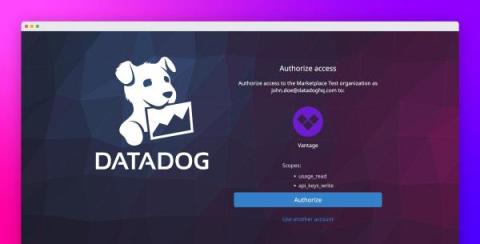
OAuth is an authorization protocol that allows apps to securely request user data without requiring the user to enter their sensitive credentials (e.g., API keys, application keys, etc.). Datadog API-based data integrations now fully support OAuth.