Smart cities are on the rise. What was once squarely placed in the realm of science fiction is now a reality, and the number of smart cities worldwide continues to grow. According to a study by Research and Markets, the market for smart cities is expected to reach over 1 trillion USD by 2027.
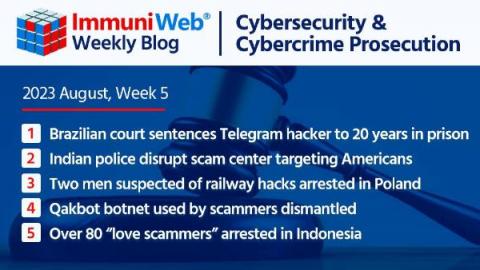
Read also: Two men suspected of railway hacks arrested in Poland, Qakbot botnet dismantled, and more.
A selection of this week’s more interesting vulnerability disclosures and cyber security news. Stand by for a flood of traffic if you have a Cisco VPN…
In an increasingly digital world, cybersecurity has become a critical concern for companies. With the rise of sophisticated cyber threats, protecting critical infrastructure and ensuring the continuity of essential services has become a top priority. The EU’s Network and Information Security Directive (NIS2), which supersedes the previous directive from 2016, establishes a framework to enhance the security and resilience of network and information systems.
The Cybersecurity & Infrastructure Security Agency (CISA) has released its 2024-2026 Cybersecurity Strategic Plan, which the agency says will change the trajectory of our national cybersecurity risk by focusing not just on how to defend but developing metrics to measure progress.
In part one of this four-part series on card cracking fraud, we covered the basics of what carding is, how carders use bots to power their attacks, and defined the most important terms and phrases within the carding vocabulary in our Carder’s Dictionary. Click here if you missed it or need a recap. In part two, we’ll be talking more specifically about the carding landscape in Russia and on Russian-speaking forums and online communities.
At this year’s AWS re:Invent, Mic McCully, Field CTO at Snyk, spoke with Jacob Salassi, Director of Product Security at Snowflake. They discussed what it looked like for Snowflake to overcome various security challenges with the right combination of processes, company culture shifts, and tool partners (including Snyk!). Read on to learn about the practices Jacob and his team established to create a successful application security program.
Financial services institutions (FSIs) have become an increasingly common target for malicious actors. According to Boston Consulting Group, FSIs are 300 times more likely to face cyber attacks than other sectors, and the 2022 VansonBourne report noted that 94% of the FSIs it surveyed experienced a cyber attack in the last 12 months.