Security | Threat Detection | Cyberattacks | DevSecOps | Compliance

Understanding AI and Data Privacy: Key Principles

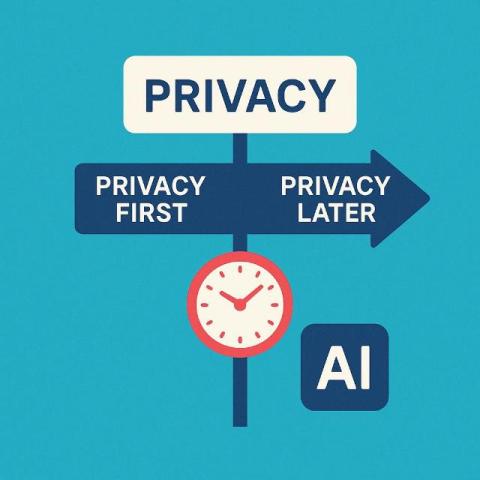
AI is now part of customer service, product design, operations, and decision making. That reach brings real benefits, and it also surfaces personal and sensitive data in new places. It raises the question: How do we ship useful AI while protecting people and meeting laws? This guide helps you understand AI and data privacy as one practice through core principles, common pitfalls, practical controls, and a step by step plan to build privacy into your AI stack from the start.

Why AI Security Breaks Without Context Based Access Control (CBAC)

Generative AI is transforming the way enterprises approach daily operations – powering virtual assistants, summarizing medical records, and aiding clinicians with insights. These benefits come at a cost: risk to a wide range of sensitive data in AI-driven workflows. Traditional access controls and content filters that work for static systems fail as these are not designed for the free-flowing, context-rich data exchanges in LLM applications.

What Is Data Privacy in AI? Explained Simply

If your company is shipping chatbots, copilots, or decision systems, you have probably heard the question many times: what is data privacy in AI, and how do we do it right. The answer is simpler than it looks. Data privacy in AI is a set of habits and controls that limit what personal or sensitive data you collect, how you use it, where you store it, and who can see it. When those habits are part of the build, AI products move faster, customers feel safer, and audits become routine.

AI Data Privacy: Concepts, Definitions & Best Practices

AI now sits inside customer support, finance, human resources and product development. That reach brings value, and it also exposes personal and sensitive data in new ways. The question is no longer whether to adopt AI. The question is how to adopt it responsibly, with AI data privacy built into the system rather than tacked on after a test run. This guide explains the core concepts, definitions and best practices you can use to design, ship and scale AI with privacy in mind.

AI Data Privacy Statistics & Trends for 2025

2025 is the year privacy becomes the competitive layer of AI. If you’re rolling out GenAI privacy is no longer a compliance chore; it’s a trust-building strategy that accelerates adoption, partnerships, and revenue. This report distills the most important AI privacy issues, statistics, and trends shaping 2025: what they mean, and how to respond with practical guardrails that protect people and performance.

Examples of AI Privacy Issues in the Real World

What’s the fastest way to lose trust? Expose private data. With AI moving from pilots to core workflows in support, finance, HR, and healthcare, one careless prompt or leaky integration can turn into headlines, fines, and weeks of incident response. The most useful way to understand the risks is to study AI privacy issues examples from the real world.

Challenges in Ensuring AI Data Privacy Compliance [& Their Solutions]

What happens when the AI feature you shipped last quarter is compliant in one region—but illegal today in another? That’s the new normal. In 2025, the EU AI Act, new U.S. state privacy laws, China’s PIPL, and APAC rules are reshaping how organizations collect, process, store, and share data for AI. Privacy isn’t a back-office task anymore; it’s a front-line guardrail for product, security, and data teams.

Why Protecto Chose SingleStore as Part of GPTGuard's Architecture

Traditional RAG creates risk. In enterprise AI, accuracy and security aren’t optional. Most vector-only databases are built for speed, but they ignore enterprise realities like security and compliance. Without context, access controls, or accurate recall, they create compliance gaps that make AI unsafe for regulated industries. At Protecto, we built GPTGuard to change that — making enterprise AI safe by preventing data leaks, enforcing privacy, and keeping compliance intact.

Top AI Data Privacy Risks in Organizations [& How to Mitigate Them]

What if just one line in a chatbot prompt could turn into a regulatory nightmare? That’s the reality enterprises face today. In fact, Gartner predicts the average data breach will exceed $5M by 2025—and AI-driven systems multiply those risks in ways traditional IT never prepared us for. Unlike legacy apps, AI doesn’t just use data—it feeds on it, reshapes it, and sometimes leaks it right back out.