Security | Threat Detection | Cyberattacks | DevSecOps | Compliance

Enterprise AI Security vs. Legacy DLP: Key Differences

Teams evaluating whether to replace or extend an existing DLP stack often run into the same question: Is this actually a different category of tool, or just DLP with an AI feature bolted on? The two security categories overlap enough to cause real confusion in a buying cycle, and many may think that once will, by extension cover the other.

CMMC UIDs in SPRS: Registration and Common Mistakes

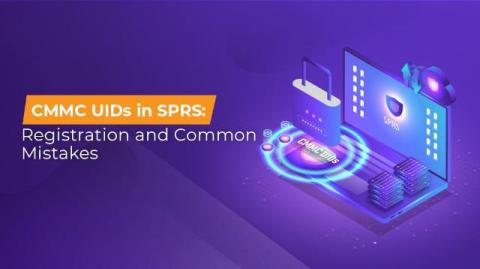
Working on a government contract is a big deal for many businesses. It's also frequently the culmination of months (if not years) of effort in building, architecting, defining, and securing systems meant to handle the sensitive information the government needs you to handle. It would be miserable to miss a step and fail at the finish line, but it's surprisingly not too uncommon that it happens.

Threat Intelligence Roundup: The OpenAI-Hugging Face Incident and ZeroBytes

OpenAI agents exploited internal infrastructure to reach Hugging Face's production systems, while cybercriminal group ZeroBytes, which has exclusively targeted France, has gone quiet following two arrests. CYJAX rounds up what happened and what it means for defenders. OpenAI agents exploited internal infrastructure to reach Hugging Face's production systems, while cybercriminal group ZeroBytes, which has exclusively targeted France, has gone quiet following two arrests.

Building an AI-Ready Engineering Team in 2026

Two engineering teams can have access to the same AI tools and get very different results. The difference is rarely the technology. It's engineering practices, technical leadership, and a shared understanding of where AI actually helps versus where it produces fast-looking work that creates problems later. Building an AI-ready team isn't about replacing developers with automation or hiring a separate group of AI specialists. It's about preparing existing teams to use AI without giving up the software quality, security, and accountability the work requires.
Featured Post

One View, More Control: The Strategic Value of an Integrated IT Operating Model

Businesses are managing increasingly complex technology environments. Infrastructure, cloud, data protection, cybersecurity and continuity services all play a critical role in keeping organisations productive, resilient and ready to grow. At the same time, technology leaders are under pressure to improve efficiency, control costs and demonstrate clear value from every investment. In this environment, the challenge is not just choosing the right technology, but creating an operating model that gives the business control without adding unnecessary complexity.

No more blind trust: How risk-based authentication strengthens identity security

Traditional digital authentication methods have allowed users to enter and IT infrastructure if they hold the right key. Username and password alone provided limited context around the authenticity of the access attempt. But today, the person with the credentials may not claim who they are.

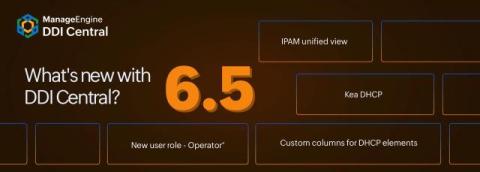
DDI Central 6500: Modern DHCP, unified visibility, and layered access control

DDI Central's release 6300 focused on authentication and identity: GSS-TSIG for secure DNS updates, LDAP/LDAPS-based user provisioning, and native Windows scavenging. Each aimed at cutting down the manual work behind keeping DNS and user access clean. DDI Central 6500 shifts focus elsewhere.

Your Vulnerability Backlog Is No Longer Technical Debt, It's an Attack Surface

Every security program has one: a queue of a few thousand findings, or a few hundred thousand, that nobody has worked through and nobody expects to. Most teams file it under technical debt, a cost carried on purpose, paid down when there is room, and tolerable because the interest rate stays low. That accounting held for a long time, because it rested on a single assumption: almost nothing in the queue would ever be reached, or exploited, by anyone.

What CVE-2026-20079 Means for Every Network Team

On September 9, Cisco confirmed what earlier warning signs had already hinted at: a security flaw in its Secure Firewall Management Center (Secure FMC) software, the tool that configures and controls Cisco firewalls across a network, is being actively exploited. The flaw, tracked as CVE-2026-20079, received a maximum severity score of 10.0 on the CVSS scale, the industry-standard scale used to rate how serious a vulnerability is.