Security | Threat Detection | Cyberattacks | DevSecOps | Compliance

The Ban That Wasn't: What Happened to the FTC's Non-Compete Ban?

Today was supposed to mark a significant shift in employment law in the US: the Federal Trade Commission’s (FTC) ban on non-compete clauses was set to go into effect. However, this anticipated change was blocked by a US District Court in Texas, leaving many wondering about the implications for small and medium-sized enterprises (SMEs) and the IT professionals they employ.

Employee Cybersecurity Awareness Training Strategies for AI-Enhanced Attacks

With the adoption of AI in almost every sphere of our lives and its unending advancement, cyberattacks are rapidly increasing. Threat actors with malicious intent use AI tools to create phishing emails and other AI-generated content to bypass traditional security measures. On the bright side, the security capabilities of AI are limitless. AI-enhanced attacks refer to cybersecurity events that use artificial intelligence to compromise individuals' and organizations' safety.

Let's Dance: Securing Access with PIM and PAM to Prevent Breaches

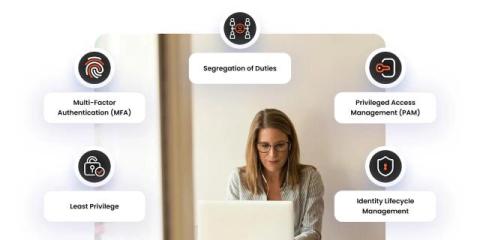
I know when to log out Know when to log in Get things done In the spirit of David Bowie, let's explore how to navigate the labyrinth of privileged access management without getting "Under Pressure." No one wants to mistype a common command, copy their proprietary data to a public location, or delete their operating system. Having multiple accounts—one for regular activities and specific privileged accounts to do sensitive tasks—ought to focus effort and prevent mistakes.

Prompt Sanitization: 5 Steps for Protecting Data Privacy in AI Apps

As Generative AI (GenAI) and Large Language Models (LLMs) become integral to modern apps, we face a critical challenge of protecting sensitive user data from inadvertent exposure. In this article, we’ll explore the importance of content filtering in LLM-powered apps, and provide strategies for its implementation. Looking for step-by-step tutorials on prompt sanitization for OpenAI, Langchain, Anthropic, and more? Skip down to the “Tutorials & further learning” section below.

How To Spot a Credit Card Skimmer

According to the FBI, credit card skimming costs individuals and banks approximately $1 billion annually. You can spot a credit card skimmer by searching for a tampered security seal, checking for misalignments, wiggling the card reader or looking inside the card reader. Continue reading to learn more about credit card skimmers, how to spot them and what you can do if your card gets skimmed.

Threat Actors Increasingly Exploit Deepfakes for Social Engineering

The availability of deepfake technology has given threat actors a valuable tool for social engineering attacks, according to researchers at BlackBerry. “Typically, online scams prey on the presumed weaknesses and susceptibility of the targeted individual,” the researchers write.

Understanding Adjust Memory Quotas for a Process

The windows security setting adjust memory quotas for a process, specifies who has the permission to change the maximum amount of random access memory (RAM) that a program or application can access at any specific time. Doing so controls and manages system resources, ensuring the system runs smoothly. The adjust memory quotas for a process setting decides who can change a program or process' memory quota.

Phishing and Ransomware: How Threat Actors Attack the Financial Services Sector

Trustwave SpiderLabs is prepped to launch its newest threat intelligence research, the 2024 Trustwave Risk Radar Report: Financial Services Sector. The upcoming report, which is set to be released on September 10, promises to be an indispensable resource for cybersecurity professionals. This comprehensive report not only sheds light on the modus operandi of a dominant ransomware gang but also delves into the persistent use of phishing and brute-force attacks to compromise credentials.