The Code Dx team is pleased to announce the general availability (GA) of Code Dx 5.3, which notably features an integration with Snyk to help customers integrate open source and container security into their continuous development processes. As we move toward a cloud native world, we’re working to ensure that developer-first tooling, secure cloud infrastructure, container security, and open source tools are fully integrated into Code Dx 5.3.
You’ve heard of DevOps. And by now, you’ve probably also heard of DevSecOps, which extends DevOps principles into the realm of security. In DevSecOps, security breaks out of its “silo” and becomes a core part of the DevOps lifecycle. That, at least, is the theory behind DevSecOps. What’s often more challenging for developers to figure out is how to apply DevSecOps in practice. Which tools and processes actually operationalize DevSecOps?
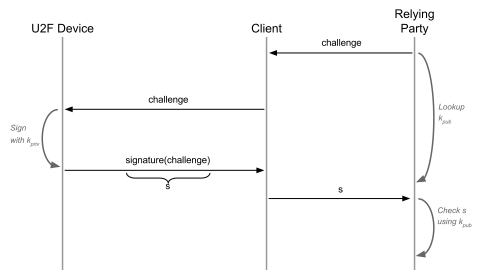
Teleport has supported multi-factor authentication (MFA) for a while now, via Authenticator Apps (TOTP) and Hardware Tokens (U2F) such as YubiKeys. But this support was pretty limited: you could only choose one MFA protocol and users could only register one device. If a user lost their device, they would be locked out and need an account reset by the administrator. So, for Teleport 6.0, we’ve reimplemented the MFA support to make it more flexible.
With software supply chain attacks on the rise, are you wondering how you can recover quickly from the recent SolarWinds breach at your company? Months after its discovery, the devastating SolarWinds hack remains a top concern for business, government and IT leaders. This destructive supply chain attack put the spotlight on software development security — a critical issue for the DevOps community.
It’s that time of year again: WhiteSource’s annual State of Open Source Security Vulnerabilities for 2021 is here. Once again, when 2020 came to a close, our research team took a deep dive into the WhiteSource database to learn what’s new and what stayed the same in the ever-evolving world of open source security.
As Uncle Ben once said, “With great power comes great responsibility.” This is also true of the Kubernetes API. It is very powerful, and you can build amazing things on top of it, but it comes with a price—a malicious user can also use the API to do bad things. Enter Kubernetes RBAC (role based access control), which enables you to use the API in a controlled manner by granting only required privileges needed, following least privilege principle.