Fix security issues, get a tshirt. The Big Fix by Snyk.
Learn about The Big Fix campaign which Snyk is leading to help developers, and security practitioners fix security issues. Join us to get a sneak (snyk?) peak into the fun.


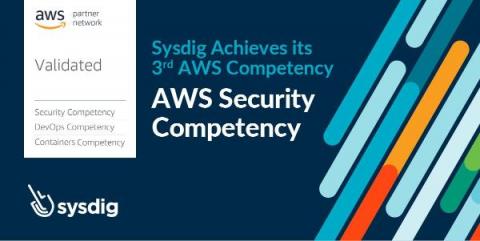
Sysdig today announced that it has achieved Amazon Web Services (AWS) Security Competency status. This crucial designation recognizes the value provided by the Sysdig Secure DevOps Platform to AWS customers to achieve their container and cloud security goals. As a key partner for the ecosystem, Sysdig collaborates closely with AWS and its customers to enhance the protection of cloud infrastructure and applications against continuously evolving security threats.
How Roman Chepurnyi uses Teleport to eliminate passwords at https://www.thredup.com/
Modern software projects are mostly composed of open source code. The question of who really controls this code, and is responsible for detecting and fixing software supply chain security issues, became a significant source of concern after the discovery of the Log4Shell vulnerability.
Are you wondering how to secure your Kubernetes clusters? Do you even know whether your Kubernetes is secure? Kubescape by ARMO might be the tool to help you with those and many other tasks related to Kubernetes security and scanning. Check this video by Viktor Farcic from DevOps Toolkit on Kubescape as he covers the 3 main K8s security areas – While reducing the number of false positives to a minimum and getting help fixing issues.
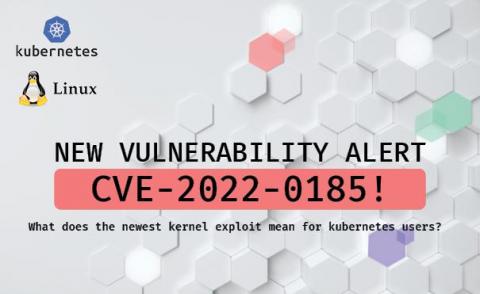
In the last few days, Linux maintainers disclosed a broadly available Linux kernel vulnerability that enables attackers to escape containers and get full control over the node. To be able to exploit this vulnerability, the attacker needs to be able to run code in the container and the container must have CAP_SYS_ADMIN privileges. Linux kernel and all major distro maintainers have released patches.
At SnykCon 2021, there were a number of insightful talks from companies that were able to build successful AppSec programs. As the Lead Platform Architect at Lunar and a Cloud Native Computing Foundation (CNCF) ambassador, Kasper Nissen’s presentation was no exception. In this post, we’ll recap Nissen’s talk about how his security team at Lunar was able to shift security left while building a cloud native bank.
The SSH agent (ssh-agent) is an SSH key manager that stores the SSH key in a process memory so that users can log into SSH servers without having to type the key’s passphrase every time they authenticate with the server. In addition to the key management feature, SSH agent supports agent forwarding, which helps to authenticate with servers that sit behind a bastion or jump server.
Kubescape is now available on the Visual Studio extension marketplace. Visual Studio code extensions are add-ons that allow developers to customize and enhance their experience in Visual Studio by adding new features or integrating 3rd party tools. An extension can range in all levels of complexity, but its main purpose is to increase developers’ productivity and cater to their workflow.