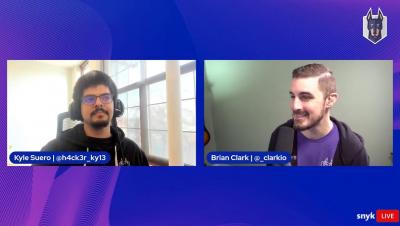
What is URL Confusion?!
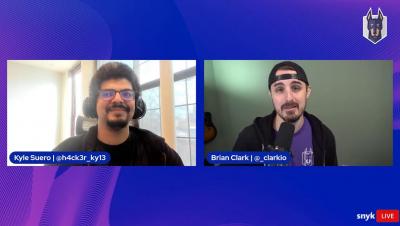
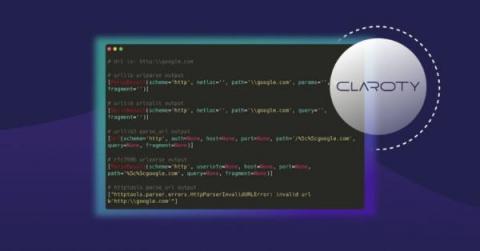
We talk with the Claroty team and Daniel Stenberg, creator of curl, about URL Confusion Vulnerabilities.


For the last decade, AWS has dominated the cloud computing space with a plethora of cloud services. One of AWS’ great innovations was AWS Fargate, their first containers as a service (CaaS) offering. Prior to the introduction of Fargate, those building in the cloud were forced to choose between IaaS paradigm-focused containers or FaaS-focused serverless functions.
SSH servers are a common target for brute-force attacks. This is even more true if your infrastructure sits behind an SSH bastion because attackers have no choice but to compromise the bastion host either by exploitation or denial of service. In this article, we will list a few controls which will help you harden your SSH servers from brute- force attacks.
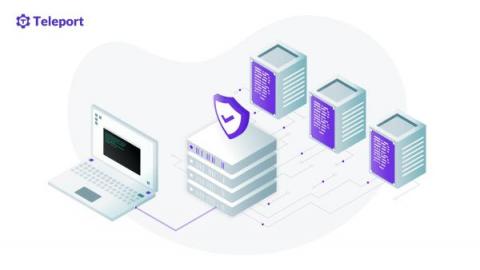
SSH bastion hosts are an indispensable security enforcement stack for secure infrastructure access. Every security compliance standard that deals with remote infrastructure access (e.g., FedRAMP AC-17 - Remote Access, HIPAA §164.312(a)(1) - Access control, SOC2 CC6.1 - Manage Points of Access) mandates preventing direct network access to the servers and APIs.
2022 feels a little different, doesn’t it? Every day I’m prepared to hear something new, something scary, or something exciting. These last couple of years have made it seem like we just never know what is coming next. It’s no different for financial services companies who have to be prepared for the unexpected, including disruptive technologies that can challenge their core businesses.
Many market-leading companies who have dominated their respective sectors with hardware or on-prem/installable software solutions are turning to SaaS offerings to fuel the next phase of their growth. Why? Simple. Market valuations are much higher for SaaS companies than they are for traditional software and hardware companies. The median multiple on earnings for a SaaS company is 12.7x as of Q3 2021 according to venture capitalist Jamin Ball who tracks the Public Cloud Software (e.g.
URLs have forever changed the way we interact with computers. Conceptualized in 1992 and defined in 1994, the Uniform Resource Locator (URL) continues to be a critical component of the internet, allowing people to navigate the web via descriptive, human-understandable addresses. But with the need for human readability came the need for breaking them into machine-usable components; this is handled with URL parsers.