Security | Threat Detection | Cyberattacks | DevSecOps | Compliance

Telecommunications giant reveals an Active Directory server breach. What can we learn from it?

We’ve always been vocal about the imminent threat of breaches and propagated the message that irrespective of the size of your business, the industry you’re in, or your geography, you can be subject to a security breach. And unfortunately, history repeats itself often. On May 11, 2020, Nippon Telegraph & Telephone (NTT), a large telecommunications company, revealed that attackers may have stolen data from its internal systems, affecting over 600 customers.

What are Security Misconfigurations and how to prevent them?

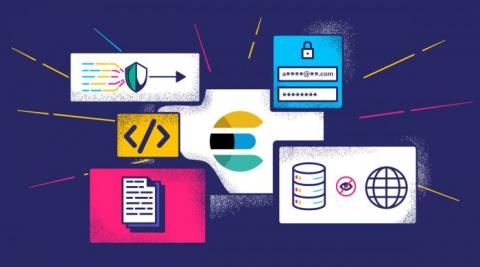
Misconfigurations are often seen as an easy target, as it can be easy to detect on misconfigured web servers, cloud and applications and then becomes exploitable, causing significant harm and leading to catastrophic data leakage issues for enterprises like the 2019 Teletext exposure of 530,000 data files which was caused by an insecurely configured Amazon Web Service (AWS) web server.

Create a domain breach report for your company

With 1Password Teams and 1Password Business, you can create a report to see if anyone with a company email address has been caught in a data breach – including people that don’t use 1Password yet. == GET SUPPORT == == GIVE SUPPORT == Want more videos? Make suggestions in the comments! Be sure to subscribe to get the latest updates.

Top 5 Data Breaches in 2020, So Far

In 2020, the chances of falling victim to data breaches are increasing. Keeping customers in the loop can be costly, time-consuming but very necessary and important to help prevent loss of personal data and decrease the risk of fraud. Cyber-attacks and data breaches can rarely be kept quiet and if the incident occurs at a high profile organisation, it’s only a matter of time before it makes the news.

SMEs and the cyber security challenge

EasyJet, CapitalOne, British Airways and Marriott are all huge companies with equally large budgets. Another thing they have in common is they all fell victim to a serious data breach, costing them hundreds of millions of pounds. If the major players with a lot of resources to devote to cyber security still get hacked, do SMEs with limited budgets stand a chance? It’s a dramatic question, so let’s explore the answer.

The value of a stolen account. A look at credential stuffing attacks.

A type of credential reuse attack known as credential stuffing has been recently observed in higher numbers towards industry verticals. Credential stuffing is the process of automated probing of and access to online services using credentials usually coming from data breaches, or bought in the criminal underground.

9 Ways to Prevent Third-Party Data Breaches

The increasing number of third-party data breaches and the sensitive information they expose have negatively impacted consumer trust. Third-party breaches occur when sensitive data is stolen from a third-party vendor or when their systems are used to access and steal sensitive information stored on your systems. In today's interconnected economy, companies rely on third-parties.

Kubernetes Security: Lateral Movement Detection and Defense

What is Lateral Movement? Lateral movement refers to the techniques that a cyber-attacker uses, after gaining initial access, to move deeper into a network in search of sensitive data and other high-value assets. Lateral movement techniques are widely used in sophisticated cyber-attacks such as advanced persistent threats (APTs).

116 Must-Know Data Breach Statistics for 2020

Data is rapidly becoming one of the most valuable assets in the modern world. The digital giants that monopolize data are arguably the most powerful companies in the world, prompting ongoing conversations about anti-trust legislation and digital privacy. Despite the overwhelming value controlled by these entities, as we'll see, even companies such as Facebook are vulnerable to the byproduct of the rapid move to digitization – the data breach epidemic.