Security | Threat Detection | Cyberattacks | DevSecOps | Compliance

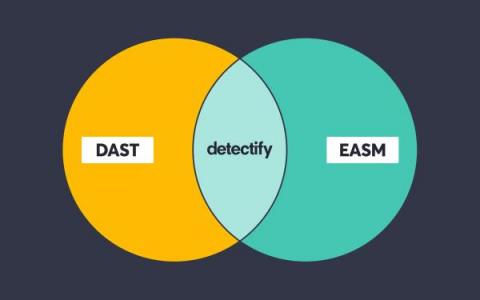
Attack Surface Monitoring vs DAST: Why security teams need both

Attack Surface Monitoring has become a critical component of modern cybersecurity programs. As organizations scale their cloud environments, applications, APIs, and third-party services, so does their external attack surface. Every new cloud instance, API endpoint, marketing microsite, and third-party SaaS tool expands your perimeter. But there are two hard truths for security teams: You cannot protect what you don’t know exists, and you cannot secure what you don’t deeply test.

Appknox vs Code-Centric SAST Tools: What Source Code Analysis Cannot See in a Mobile App

Your source code passed every scan. Every code review approved. Every linter ran clean. Your users just downloaded the compiled binary. Those are not the same artifact. Code-centric SAST tools analyze the code you write. Appknox analyzes what you ship. This is not a feature distinction. It is an architectural one, with direct consequences for what gets caught and what does not.

Best SAST Solutions: How to Choose Between the Top 12 Tools in 2026

Static Application Security Testing (SAST) has become a critical part of modern DevSecOps. With software supply chain attacks rising and compliance requirements tightening, organizations need reliable SAST solutions that integrate into development workflows, reduce false positives, and deliver actionable remediation. Choosing the right tool is not just about scanning for vulnerabilities, it is about empowering developers to code securely without slowing delivery.

Best SAST Tools in 2026: Top 10 Solutions Reviewed

SAST (Static Application Security Testing) tools analyze an application’s source code to identify potential security vulnerabilities without executing the code. They are crucial for finding security flaws early in the development lifecycle, helping developers address issues before they become more costly and difficult to fix. This guide covers the best SAST tools available in 2026 and how to evaluate them.

What Is SAST - Static Application Security Testing

SAST, or Static Application Security Testing, is a method of analyzing source code to find vulnerabilities before the application is deployed. It's a type of white box testing that scans the code without executing it, looking for weaknesses that could be exploited. SAST helps developers identify and fix security issues early in the Software Development Life Cycle (SDLC), potentially reducing costs and improving the overall security posture of the application.

Introducing our open source AI-native SAST

Static application security testing (SAST) tools help developers quickly catch potential vulnerabilities as they code. However, these tools rely on inflexible rules that often generate a high number of false positives, reducing trust in their accuracy and slowing adoption. To help developers access context-aware vulnerability detection, we’ve released an open source AI-native SAST solution. This tool scans code changes incrementally and surfaces security issues in real time.

AI-driven DAST for mobile apps: The next evolution of Dynamic Security Testing

“AI-powered DAST” is everywhere. It signals progress, but assumes something fundamental was missing. It wasn’t. DAST struggled not from lack of intelligence, but from lack of depth. Most tools never reached inside authenticated, stateful, multi-step journeys where real logic, sensitive data, and critical vulnerabilities exist. That’s the part Appknox solved years ago. AI here is not a reset. It is an accelerator, applied to a system already operating where risk actually lives.

The Next Generation of SAST Scanning

For years, developers have faced a frustrating trade-off when it comes to application security testing: you could have speed, or you could have depth. Deep, comprehensive scans often meant waiting for results. Fast scans, on the other hand, often missed critical vulnerabilities or flooded the backlog with false positives. But as development cycles accelerate and AI-generated code introduces new risks at scale, this choice is no longer acceptable.

SAST in the IDE is now free: Moving SAST to where development actually happens

We’re making a fundamental change to how teams use SAST. SAST in the IDE is now free. This means developers can run SAST scans directly inside their editor, with real-time feedback and project-wide visibility, using the same analysis engine and SAST rules as Aikido. Detection runs automatically as developers work, without limiting coverage at the detection layer.

Best SAST tools: Top 10 solutions in 2025

SAST (Static Application Security Testing) tools analyze an application’s source code to identify potential security vulnerabilities without executing the code. They are crucial for finding security flaws early in the development lifecycle, helping developers address issues before they become more costly and difficult to fix. Unlike dynamic analysis techniques, SAST operates without executing the program, focusing entirely on the static codebase.