Security | Threat Detection | Cyberattacks | DevSecOps | Compliance

The Latest Cybersecurity News & Insights From Around The World




The Data Problem: Why LLM Security Is So Complex
The Data Problem: Why LLM Security Is So Complex Large language models are trained on terabytes of data, but what happens when that data is flawed? In this video, A10 Networks' security experts, Jamison Utter, Madhav Aggarwal, and Diptanshu Purwar, discuss a critical, often-overlooked aspect of AI security: the training data itself. They explain that LLMs are inseparable from the data they're trained on, which means if the data contains biases, toxic content, or other vulnerabilities, those flaws are vulnerable to exploitation by attackers.

Interview: Building human & AI synergy with Peter Ruta, Founder / CEO of Arcanna.ai [242]
On this episode of the Cybersecurity Defenders Podcast we speak with Peter Ruta, Founder / CEO, Arcanna.ai.
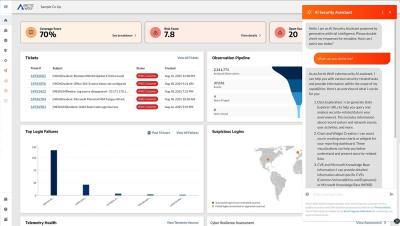
How to Use the AI Security Assistant for Deeper Security Expertise and Context
In this demo, we will look at three different use cases for the AI Security Assistant including general security knowledge, ticket context and data visualization.
Securing Shadow AI: 6 Principles from Security Leaders Who've Been There
Everyone's racing to use AI right now. But securing AI adoption while maintaining productivity—getting visibility into shadow AI, educating employees without blocking innovation, and building governance that actually works—is harder than it looks. We recently hosted a discussion between Anant Mahajan, Head of Product at Nightfall, and Yunique Demann, VP of Information Security at TPx, to dig into the practical realities of AI governance.

Safeguard: Using the double-edged sword of AI for good
Examine the function of AI in security tools, and how this double-edged sword can be used for good or ill in the cybersecurity sphere. Plus, see its integration into an identity fabric and get a glimpse into its responsible use – paired with the human element – in One Identity Safeguard.


August Release Rollup: AI-Powered Agents, Egnyte to Egnyte Connector 2-Way Sync, and More
We’re excited to share new updates and enhancements for August, including: For more information on these updates and others, please read the complete list below and follow the links for more detailed articles.

Securing AI and LLMs: A New Security Paradigm
Securing AI and LLMs: A New Security Paradigm When interacting with AI tools like ChatGPT, it's clear that there's a thought process behind their responses. But what happens when an attacker hijacks that process? In this clip from "Securing AI Part 2: What Makes Protecting AI a Unique Challenge?", A10 Networks' security leaders — Jamison Utter, Madhav Aggarwal, and Diptanshu Purwar — discuss this new security paradigm.