Security | Threat Detection | Cyberattacks | DevSecOps | Compliance

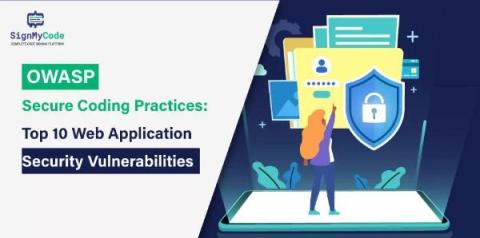
What are OWASP Secure Coding Practices? Top 10 Web App Security Vulnerabilities 2021 vs 2025

OWASP (Open Web Application Security Project) is a non-profit organisation that has been in existence since 2001. Its mission is to educate (provide direction) webmasters and security professionals about how to create, buy, and keep secure, trusted software applications.” In simple terms, OWASP is a group of application security companies and experts that work collectively to develop a list of the most serious security threats to web applications.


Snyk Finds Prompt Injection in 36%, 1467 Malicious Payloads in a ToxicSkills Study of Agent Skills Supply Chain Compromise

The first comprehensive security audit of the Agent Skills ecosystem reveals malware, credential theft, and prompt injection attacks targeting OpenClaw, Claude Code, and Cursor users Agent skills are reusable capability packages that instruct AI agents how to interact with tools, APIs, or system resources—and they're rapidly becoming standard in AI-powered development.

280+ Leaky Skills: How OpenClaw & ClawHub Are Exposing API Keys and PII

On Monday, February 3rd, Snyk Staff Senior Engineer Luca Beurer-Kellner and Senior Incubation Engineer Hemang Sarkar uncovered a massive systemic vulnerability in the ClawHub ecosystem (clawhub.ai). Unlike the malware campaign we reported yesterday involving specific malicious actors, this new finding reveals a broader, perhaps more dangerous trend: widespread insecurity by design. In this write-up, Snyk is presenting Leaky Skills - uncovering exposed and insecure credentials usage in Agent Skills.
Sponsored Post

Ten threats traditional Antivirus misses (and Next-Gen AV doesn't)

The cybersecurity arena is rapidly shifting and CISOs are locked in a relentless struggle against adversaries who rarely reveal themselves. Traditional antivirus (AV) solutions, which has been the primary shield (and still is for many companies) has reached its 'End of life'. The reason is clear: signature-based protection simply isn't enough anymore.

Disclosure: SupportCandy Ticket Attachment IDOR (CVE-2026-1251)

During independent security research conducted as part of the Wordfence Bug Bounty Program, we identified a broken access control vulnerability in the SupportCandy plugin for WordPress. SupportCandy is a helpdesk and customer support ticketing plugin that enables organisations to manage user-submitted support requests directly within their WordPress environment, including the ability to upload files and exchange attachments through ticket replies.

The Prescriptive Path to Operationalizing AI Security

In introducing the AI Security Fabric, we have outlined how security must evolve as software is built by humans, models, and autonomous agents working at machine speed. The Fabric defines the architectural shift required to build trust at AI speed, delivered through the Snyk AI Security Platform. We’re now focusing on the next question: how organizations put that vision into practice. Operationalizing AI security is not about enabling a single feature or deploying a tool.

Introducing the AI Security Fabric: Empowering Software Builders in the Era of AI

Today, we’re thrilled to introduce the AI Security Fabric, delivered through the Snyk AI Security Platform, and operationalized through a prescriptive path for AI security. As software creation shifts to humans, models, and autonomous agents working together at machine speed, security must evolve just as fundamentally. The AI Security Fabric defines the new paradigm, and the Prescriptive Path shows how the Snyk AI Security Platform gets you there.

Critical Vulnerability Alert: CVE-2025-40551 in SolarWinds Web Help Desk

A critical vulnerability (CVE-2025-40551) has been identified in SolarWinds Web Help Desk, a widely used IT service management platform deployed across enterprise and public sector environments to manage support tickets, assets, and internal workflows. Successful exploitation could allow an unauthenticated attacker to execute arbitrary commands on the underlying host system.

CVE-2026-25253: OpenClaw Bug Enables One-Click Remote Code Execution via Malicious Link

CVE-2026-25253 is a high-severity vulnerability (CVSS 8.8) in OpenClaw (formerly Clawdbot/Moltbot), an open-source AI agent framework. It allows attackers to exfiltrate authentication tokens via a crafted URL, leading to full gateway compromise and remote code execution (RCE) with one click. Disclosed in early February 2026, it affects versions before 2026.1.29.