Security | Threat Detection | Cyberattacks | DevSecOps | Compliance

CISA KEV's Known Ransomware Attribution

This past week, Patrick Garrity, Security Researcher at Nucleus, spent a lot of time exploring Cybersecurity and Infrastructure Security Agency's update the Known Exploited Vulnerabilities catalog, which now includes attribution to vulnerabilities associated with ransomware campaigns. In this short video, he explores this new addition and walks through the data visualizations he created to provide broader visibility into this new addition.

How Cloudflare mitigated yet another Okta compromise

On Wednesday, October 18, 2023, we discovered attacks on our system that we were able to trace back to Okta – threat actors were able to leverage an authentication token compromised at Okta to pivot into Cloudflare’s Okta instance. While this was a troubling security incident, our Security Incident Response Team’s (SIRT) real-time detection and prompt response enabled containment and minimized the impact to Cloudflare systems and data.

GitHub Copilot code security: XSS in React

In an evolving era of Artificial Intelligence (AI) and Large Language Models (LLMs), innovative tools like GitHub's Copilot are transforming the landscape of software development. In a prior article, I published about the implications of this transformation and how it extends to both the convenience offered by these intelligently automated tools and the new set of challenges it brings to maintaining robust security in our coding practices.

Cisco's Zero-Day Vulnerability (CVE-2023-20198)

Cisco has released a Product Security Incident Response Team (PSIRT) advisory regarding a zero-day vulnerability in the web UI feature of Cisco IOS XE software. Cisco has stated that the web-based user interface should never be accessible through the public internet, yet research indicates that more than 10,000 Cisco devices have been exploited by an unknown threat actor. This critical vulnerability is being tracked as CVE-2023-20198 and is currently undergoing investigation for active exploitation.

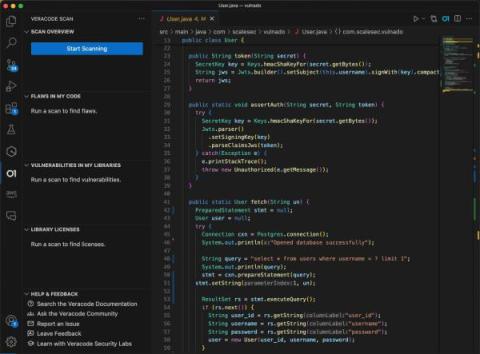
Securing symmetric encryption algorithms in Java

In our connected world, securing digital data has become an utmost priority. With the wide spread of Java applications in various sectors, from banking to healthcare, we must emphasize the importance of encryption. Encryption is converting readable data or plaintext into unreadable data or ciphertext, ensuring that even if encrypted data is intercepted, it remains inaccessible to unauthorized individuals.

Release Spotlight: Trends Page Upgrade and Bulk Data Export Functionality

In vulnerability management (VM), the task of sifting through vast amounts of data to pinpoint critical insights can feel like searching for a needle in a haystack, specifically a haystack with many precious needles that all look alike. And, of course, the one needle you’re looking for is mission-critical and can mean the difference between securing your business and leaving it open to attack.

Things You Must Know About Cyber Security in the Cloud

In our rapidly evolving and interconnected digital environment, cloud computing has transformed the manner in which organizations store, manage, and retrieve their data and software applications. The cloud offers unparalleled advantages, such as scalability, flexibility, and cost-efficiency. Nevertheless, these advantages also bring an increased emphasis on the significance of cybersecurity within the cloud.

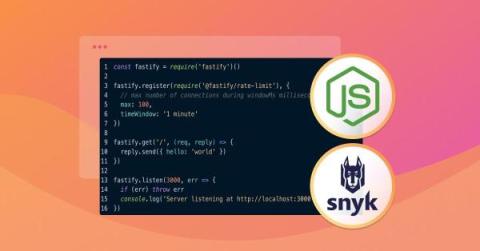
How to protect Node.js apps from CSRF attacks

A cross-site request forgery attack (CSRF) attack is a security vulnerability capitalizing on trust between a web browser and a legitimate website. Crafty attackers manipulate browsers into executing malicious actions on websites where users authenticate themselves and log in. Often, these attacks start when users click a link attached to a deceptive email or land on a compromised website, unaware of the logic executing in the background.