Security | Threat Detection | Cyberattacks | DevSecOps | Compliance

The Partnerships Taking on AI Security: Daniel Bernard, CrowdStrike Chief Business Officer

The previous episode of the Adversary Universe podcast explored the “vuln-pocalypse” and the implications of advanced AI models accelerating vulnerability discovery and exploitation. Now, we’re diving into how companies are working together to face these evolving security risks. CrowdStrike Chief Business Officer Daniel Bernard spends much of his time talking with partners and customers about how to address their growing concerns: Is their business protected? Do they know which vulnerabilities are in their environment? What do they do about them?

AI SOC vs. white box AI: Why black boxes fail in the real world

There’s a growing wave of “AI SOC” startups promising autonomous everything. They’ll triage your alerts, investigate threats, and even run your playbooks. Push a button, let the machine handle the mess, and enjoy the magic. It sounds great until the moment something breaks. Then everyone, not just security, asks the same question: “What exactly did it do?” And that’s when these systems turn into a liability.

How to Detect Shadow AI

In 2026, the gap between AI adoption and AI oversight has become a primary boardroom concern. While generative AI has supercharged productivity, it has also introduced Shadow AI: the unmanaged, invisible use of unauthorized AI apps and autonomous agents that operate outside the view of traditional IT security. In this guide, you’ll learn why Shadow AI is exponentially harder to detect than Shadow IT and, more importantly, how to build a modern detection framework. We’ll explore.

How Cloudflare responded to the "Copy Fail" Linux vulnerability

On April 29, 2026, a Linux kernel local privilege escalation vulnerability was publicly disclosed under the name "Copy Fail" (CVE-2026-31431). Cloudflare’s Security and Engineering teams began assessing the vulnerability as soon as it was disclosed. We reviewed the exploit technique, evaluated exposure across our infrastructure, and validated that our existing behavioral detections could identify the exploit pattern within minutes.

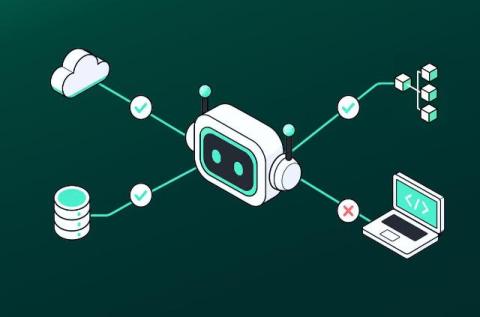
Credential management for AI agents

The proliferation of credentials outside centralized visibility and control is known as “credential sprawl,” and attackers are eager to take advantage of it. Unfortunately, credential management is a broad problem that only grows in complexity as organizations add new tools, employees, and partners.

AI Security and Trust: Why SOC Teams Don't Trust AI

See how Torq harnesses AI in your SOC to detect, prioritize, and respond to threats faster. Request a Demo 92% of security leaders say something is actively reducing their trust in AI within the SOC. These aren’t skeptics, they’re people who have already adopted AI and believe in its ability to enhance security operations. We know from the 2026 AI SOC Leadership Report that AI is already widely adopted in the SOC, with 94% of organizations using it in some capacity.

Agentic AI in security operations: Friend, risk, or both

Agentic AI is forcing a hard question on every security leader: when your SOC is full of autonomous “doers” instead of just dashboards and scripts, is that your new best friend or a brand‑new risk surface you barely understand? The honest answer is both, and the way you design, govern, and deploy these systems will decide which side wins.

Snyk Embeds Anthropic's Claude to Advance AI-Powered Security for Software Development

BOSTON, May 7, 2026 — Snyk, the AI security company, today announced it is leveraging Anthropic's Claude models to advance software security in an era of AI-powered development. Starting today, Snyk has integrated Claude into the Snyk AI Security Platform — powering automated vulnerability discovery, prioritization, and developer-ready fixes across code, dependencies, containers, and AI-generated artifacts. The threat driving that integration is real and accelerating.

Are banks ready for AI-powered cyber threats?

A recent American Banker article, “Knock on wood: Are banks doing enough to cope with Mythos?” raises a timely and uncomfortable question about advanced AI models like Anthropic’s Claude Mythos. As highlighted in the article, INETCO CEO Bijan Sanii points out a critical truth: The conversation is being fueled by the emergence of AI technology capable of identifying software vulnerabilities at a speed and scale that was previously unimaginable.