Security | Threat Detection | Cyberattacks | DevSecOps | Compliance

Why Identity Security is Key To Managing Shadow AI

Employees are adopting Artificial Intelligence (AI) tools to enhance their productivity, but they rarely consider the security implications of doing so. When an employee pastes sensitive customer data into an unapproved AI tool, that data is processed by a third-party model outside the organization’s control, often leaving no audit trail for security teams to review.
Frontier AI Is Collapsing the Exploit Window. Here's How Defenders Must Respond.

The defensive timeline in cybersecurity is changing faster than most organizations are prepared for. For years, defenders operated with an assumption that there would be some delay between vulnerability disclosure and exploitation. That delay created a window for patching, mitigation, and detection. It wasn’t perfect, but it gave security teams time to act. Frontier AI is removing that buffer and changing how organizations must consider cyber risk.

AI Workload Security on GKE: Evaluating Google Cloud Native vs Third-Party Solutions

A CISO running AI agents on GKE has watched three Google product launches in eighteen months — Model Armor, expanded Security Command Center coverage for AI workloads, additions to Chronicle’s curated detection content — and is being asked whether the GCP-native stack is now sufficient. The vendor demos and the Google Cloud blog say yes. The 2 AM analyst experience says something different.

What we learned using AI agents to refactor a monolith

AI agents are increasingly used to refactor large codebases, but many teams lack a clear understanding of where they succeed and where they fail. At 1Password, we applied agentic tooling to a multi-million-line Go monolith, and in this blog we'll share what worked, what broke, and what it means for teams adopting AI in production systems.

Introducing Decipio: A Community Tool to Catch Credential Theft in the Act with Defense First AI

Today, Arctic Wolf is announcing Decipio, a new community‑shared cybersecurity tool designed to help defenders catch attackers while they’re trying to steal credentials inside a network. Credential theft is one of the most common ways cyber attacks begin and one of the hardest to detect early. In many cases, there’s no alert, no obvious warning, and no immediate sign that anything is wrong.

AI Penetration Testing: Protecting LLMs From Cyber Attacks

88% of organizations now regularly use artificial intelligence (AI) in at least one business function. While adoption of AI technologies has accelerated rapidly, security measures often lag. The rush to roll out AI has, in many cases, overshadowed essential testing and safety protocols. This is particularly a worry when AI and Large Language Models (LLMs) become deeply embedded within organizational workflows and systems in a way that most software isn’t.

Why AI Security Needs More Than One Tool #shorts #ai

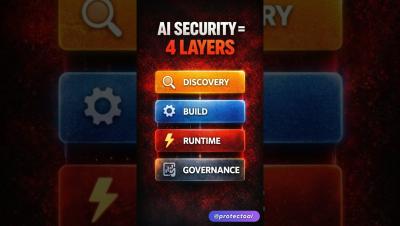
Why AI security needs more than one tool Most teams believe a single cybersecurity tool—like WAF, EDR, or API security—is enough to protect their AI systems. But that approach is outdated. AI security is not one layer—it’s a full stack problem. Discovery – Identify Shadow AI and unknown AI usage Build-Time Security – Prevent data poisoning & model risks (MLSecOps) Runtime Security – Stop real-time AI attacks and agent misuse Governance (AISPM) – Ensure visibility, compliance, and policy control.

AI Guardrails - DSPM Enters a New Era of Control and Visibility

You cannot turn a corner without entering the world of AI. I was in a big box home improvement store the other day and there was a manufacturer touting the AI built into their refrigerator! Children’s toys, personal electronics, and even cat litter boxes are now selling AI-assisted products. I am a technology early adopter, and where I’ve seen good uses of AI, we are in the phase of “throw AI into everything” mode, as we do not know what will stick.

The Hidden Cost of Waiting on Medical Records

Operations directors know the exact feeling of hitting a brick wall. You need critical case files to move forward, but you are stuck waiting on unresponsive healthcare providers. The phone rings endlessly. Faxes go into a black hole, and your team is left twiddling their thumbs. This immediate operational frustration is more than just an annoyance. It is a measurable drain on your firm's finances. Every day your team spends fighting with hospital compliance departments is a day of lost productivity.