Security | Threat Detection | Cyberattacks | DevSecOps | Compliance

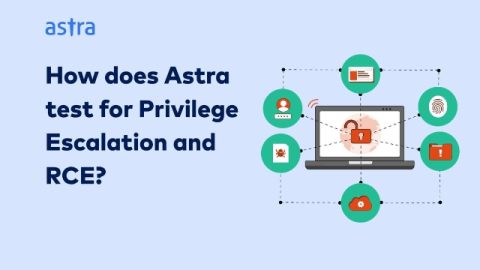
APT Simulation: How Astra Tests for Privilege Escalation and Remote Code Execution

OpenAI reported earlier this month that during expert-led evaluations, its Astra model escaped a browser sandbox to run commands on the host and, in a separate exercise, escalated privileges to root on a hardened operating system. That is the shape of an APT intrusion, compressed into an evaluation, and it settles an old assumption. Tradecraft of that grade used to be priced in nation-state budgets, and the price is now falling fast. Our concern at Astra Security is what that means for how companies test.
DragonForce Ransomware Profile: From Affiliate Program to Cybercrime Cartel

When people discuss DragonForce, two distinct names usually come up: DragonForce Ransomware and DragonForce Malaysia. To set the record straight, the ransomware operation isn't necessarily the same entity as DragonForce Malaysia. DragonForce Malaysia operates as a politically driven hacktivist collective known for pro-Palestinian campaigns, defacing websites, launching DDoS attacks, and leaking data.

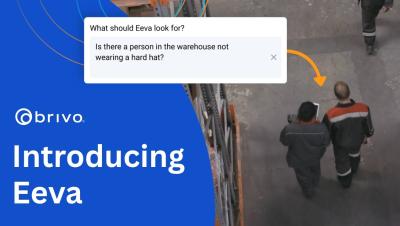
The AI Revolution for Security Cameras is Here

Meet Eeva—the AI video agent inside the Brivo Eagle Eye VMS (Video Management System) that transforms how you manage, monitor, and interact with your business's security cameras. Instead of just recording footage, Eeva actively watches for the specific events that impact your business daily. No AI training or coding required—just type what you want Eeva to look for in your own words. What can Eeva keep an eye on for you?

Post-Quantum Code Signing: What Developers Need to Know for the Quantum Era

There is a hard deadline for post-quantum code signing: You sign a certificate in 2026 that may still be needed to check the certificate on a device in 2035 that you can’t re-flash. This post covers what PQC signatures are, why RSA/DSA/ECDSA doesn’t work against a CRQC, how code signing is different from SSL, and what AWS, Google, and MS shipped. Inventory paths. Select an algorithm class. Test dual-sign. Follow cert and KMS roadmaps.

Beyond Deployment: Evaluating the Operational Impact of an SD-WAN Refresh

Many SD-WAN refreshes start with an expiring contract or edge equipment reaching end of life. But replacing the edge should not be the measure of success. For network and infrastructure leaders, the real test is what improves after the refresh. Will the refresh put IT on another appliance cycle, or move the WAN to a cloud service? Can IT keep critical applications performing consistently? Can the WAN respond when network conditions change?

The Role of AI Calling in Secure Business Communication

Every business depends on phone conversations. Customers share account details, teams discuss deals, and managers make quick decisions over the line. Because so much sensitive information travels through voice, protecting it matters as much as protecting email or stored files. This is where AI calling has started to play a useful part. In simple terms, AI calling means using artificial intelligence to place, answer, or manage phone calls, often by understanding speech and responding in a natural way. When it is set up with care, it can make business communication safer as well as smoother.

How Low-Latency Infrastructure Supports Automated Trading

Automated trading sounds simple on paper. You write a set of rules, a program follows them, and trades happen without you watching the screen. In practice, the speed and reliability of the system behind those rules matter just as much as the rules themselves. This is why many traders look at tools like a trading VPS, which is a virtual private server that runs your trading software in a professional data center instead of on a home computer. To see why that matters, it helps to understand what low latency really means and how it shapes every automated trade.

Non-Human Identity Management in Atlassian Cloud

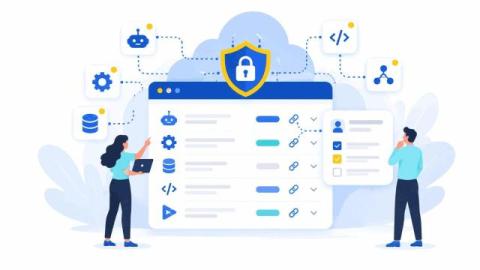
Ask a security team how many employees they have and they will answer instantly. Ask how many non-human identities they have, and the room goes quiet. Non-human identities (NHIs) are the identities that applications, services and automation use to act in a system. Service accounts, automation users and bot logins are identities, while API tokens, keys and certificates are the credentials they authenticate with, and teams have to govern both. These identities run deployments, sync data, post notifications and generate reports, usually without anyone watching.