Security | Threat Detection | Cyberattacks | DevSecOps | Compliance

What is an API Gateway? - Definition, Benefits and Limitations

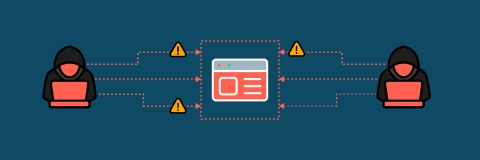
An API Gateway is a mediator between the client and the collection of backend services. It accepts all API calls and routes them to one or more appropriate backend services. It doesn’t stop there; it aggregates appropriate data/ resources and delivers it to the user in a unified manner. Placed in front of the API/ group of microservices, the API gateway is the single-entry point for all API calls made to and executed by the app.

CVE-2023-46604: Critical RCE Vulnerability in Apache ActiveMQ

On October 27, 2023, Apache published a security advisory addressing that a critical remote code execution (RCE) vulnerability has been fixed in the latest updates for Apache ActiveMQ products, CVE-2023-46604. This vulnerability was rated with a maximum Common Vulnerability Scoring System (CVSS) score of 10.0, as it can be exploited remotely by an unauthenticated threat actor in low complexity attacks.

Exploitation of CVE-2023-46604 in Apache ActiveMQ Leads to TellYouThePass Ransomware

This article aims to share timely and relevant information about a rapidly developing campaign under investigation. We are publishing it as early as possible for the benefit of the cybersecurity community, and we may provide updates in the near future once more details become available in our research.

Why White Label Cloud Services are Important to MSP's

What Are White Label Cloud Services? White-label cloud services are cloud solutions that are provided by a third-party vendor but can be rebranded and customized to fit the branding and requirements of the MSP or their clients. Essentially, white-label cloud services allow MSPs to offer cloud-based solutions under their own brand, enabling them to maintain consistency in their service offerings and provide a more cohesive experience to their clients.

Broken access control vulnerabilities and why scanners can't detect them

Broken access control, the vulnerability category consistently ranking on the OWASP Top 10 Web Application Security Risks list, poses the most significant challenge for application security right now. Over-reliance on automated solutions to tackle these challenges creates a false sense of security and could have severe implications for application owners.

SSO: What is it and what are the benefits for cybersecurity?

Single sign-on (SSO) is a tool that simplifies the authentication process by allowing users to log in and access various digital applications and services using a single set of credentials. This authentication solution works through a central service that authenticates users once and then provides an authentication token for the applications they wish to use. This token enables applications to verify user identity without users having to re-enter their credentials.

Empowering a Secure Digital Future with Centripetal Ireland During Cybersecurity Awareness Month

In today’s digital world, the importance of cybersecurity is more critical than ever. With the constant evolution of cyber threats, safeguarding sensitive data and digital assets has transitioned from an option – to an absolute necessity. Each October, Cybersecurity Awareness Month focuses on the importance of cybersecurity in our interconnected world.

What is NQE?

Using Network Query Engine, Forward Enterprise users can start querying their network without knowing which vendors are present and search for what they want to report on without worrying about the different ways to capture and parse this information in a multi-vendor environment. This gives the network and security operators access to normalized and structured data that is easy to consume and generate reports on to answer questions that were next to impossible to answer without access to this structured data.