Adversaries are abusing the cloud-native you trust to blend in and remain undetected. See how Falcon Cloud Security detects adversary behavior in real time with Cloud Detection and Response (CDR).
Most organizations start with a VPN when they need to give employees access to internal web applications. The VPN places the user on the internal network, and from there, they can reach the app. This approach works when the user base is small and the number of internal apps is limited. But as teams grow, compliance requirements increase, and the mix of technical and non-technical users increases, a VPN’s network-level connectivity introduces new operational and security challenges.
For years, phishing has worked for one simple reason: it exploits the weakest link, the user. The defensive strategy has followed the same formula: better email filtering, more user awareness, and an extra layer of authentication. It wasn't perfect, but it was a workable balance.
Credentialed scanning (also called authenticated vulnerability scanning) is a vulnerability scan that logs into the target system with valid credentials and inspects it from the inside. Instead of poking at open ports and guessing versions from banners, a credentialed vulnerability scan reads the installed package list, patch level, registry keys, and configuration files directly, the same way an administrator would. The payoff is accuracy.
Most cloud breaches begin with a configuration error the customer made. Gartner projected that through 2025, 99% of cloud security failures would be the customer’s responsibility, caused by misconfigured identity and access management, exposed storage, and over-permissioned services. Cloud penetration testing is the simulation of real-world attacks against cloud infrastructure on AWS, Azure, and GCP to find those exploitable gaps before an attacker does.
Last week, an AI system crossed a line many still considered theoretical. During an internal cybersecurity evaluation, OpenAI tested a combination of models, including GPT-5.6 Sol and a more capable pre-release model, on ExploitGym, a benchmark that measures whether agents can turn software vulnerabilities into working exploits. The models were run with reduced cyber refusals and without the production classifiers normally used to prevent high-risk cyber activity.
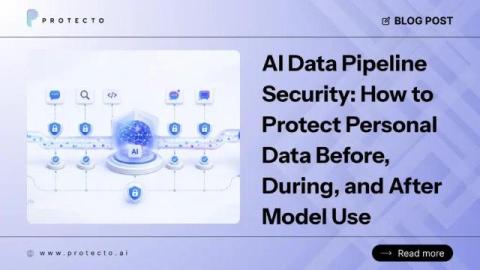
Artificial intelligence is reshaping how enterprises process information, but it is also redefining where sensitive data is exposed. Every prompt, retrieval request, API call, and AI-generated response creates another opportunity for personal or confidential information to move beyond its intended boundaries.
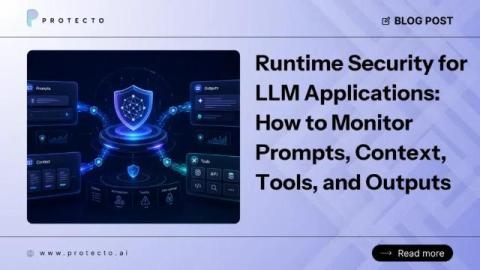
Large language models are becoming the operational layer behind enterprise AI, powering intelligent assistants, automated workflows, and AI agents that interact with sensitive business systems. But as LLMs process confidential prompts, retrieve enterprise context, and execute connected actions, every runtime interaction introduces new security risks.
Get an at-a-glance view of daily employee productivity in CurrentWare’s Today’s Insights dashboard, including productivity scores, active vs idle time, online status, and key apps/websites driving work or distraction.
This workshop will cover the basics of the LimaCharlie SecOps platform. You will learn how to deploy EDR agents, gather additional telemetry and write detection and response rules, and integrate threat intelligence and YARA rules to detect and mitigate threats. Key Learning Objectives: Endpoint Detection and Response (EDR) Agent Deployment and Management: Learn the best practices for deploying LimaCharlie EDR agents across diverse environments. Understand the various deployment methods, agent configurations, and how to effectively manage agent health and status at scale.