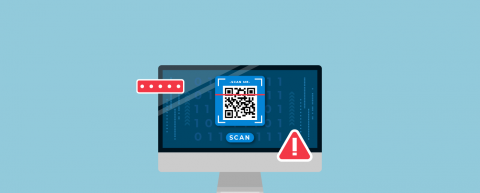
From making contactless payments on mobile payment apps and viewing paperless menus to contact tracing Covid-19 cases, QR (Quick Response) codes are everywhere and in popular usage. This ubiquity and convenience have also made QR codes popular and lucrative targets for cybercriminals who leverage malicious QR codes to illegally gain access to confidential information, spread malware, or steal money.
Amazon Virtual Private Cloud (Amazon VPC) is an AWS service that enables you to launch AWS resources within your own virtual network. Because you can deploy VPCs in separate regions and other VPC components themselves are deployable across different Availability Zones, VPC-hosted environments tend to be highly available and more secure.
In part 1 of this series, we looked at the common components of an Amazon VPC including CIDR blocks, subnets, firewalls, and route tables. We also looked at approaches for how to configure those components securely.
If you were looking at all the opportunities data unlocks for your businesses, you’ve probably stumbled upon DaaS. DaaS stands for data as a service, which may appear as something overly complicated and expensive to consider. It’s quite the opposite, and it has the power to help a company leverage IoT and cloud data without investing heavily in infrastructure and software. To truly assess whether it is complicated to implement and what benefits it delivers, you need to know what DaaS is.
Meet Shathak – a threat group tied to malware used in the Russian-speaking underground targeting enterprises across different sectors in the Americas, Europe and Asia
Ever since the digital transformation in banking, we have seen a giant shift towards digital onboarding in financial services. Technologies like liveness and identity verification solutions have started to be a prominent step in intelligent digital onboarding. ID verification software with the capability to onboard customers quickly and remotely have helped in this shift towards digital customer onboarding.
Ransomware and other malicious threats have become commonplace around the globe. But the reality is, whether it be encrypted records, stolen email credentials, or exfiltrated financial statements, these incidents generally involve a limited number of individuals or groups. Before your feathers are completely ruffled, understand that by no means am I minimizing the impact cybercriminals can have on a business. But have you considered attacks of greater scale? Perhaps those that affect the populus?
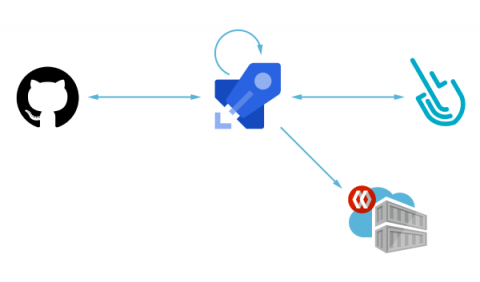
Scanning a container image for vulnerabilities or bad practices in your Azure Pipelines using Sysdig Secure is a straightforward process. This article demonstrates a step by step example on how to do it. The following proof of content showcased how to leverage the sysdig-cli-scanner in Azure Pipelines. Although possible, it is not officially supported by Sysdig, so we recommend checking the documentation to adapt these steps to your environment.