Security | Threat Detection | Cyberattacks | DevSecOps | Compliance

The Latest Cybersecurity News & Insights From Around The World


Zero-Day Vulnerabilities in August 2025
In August 2025, AppTrana detected 459 zero-days and blocked every single one. Explore the full report to see how complete coverage looks.

The business behind cybercrime: ROI, R&D, and pizza parties #Shorts #securitymatters
The business behind cybercrime: ROI, R&D, and pizza parties.
Deception Technology in Banking: A New Line of Defense Against Insider Threats and Fraud
Insider threats cost organizations an average of $17.4 million annually, with financial services facing costs up to $20.68 million per organization according to the Ponemon Institute 2025 Cost of Insider Risks Global Report. Traditional security measures fail when malicious behavior originates from authorized users who bypass most security controls without triggering alerts. Cyber criminals increasingly recruit bank employees to gain unauthorized access, steal customer data, and facilitate fraud rings.

MSSP Playbook: Building a Profitable Managed WAF Service
For Managed Security Service Providers (MSSPs), Web Application Firewall (WAF) or Web Application and API Protection(WAAP) services have become table stakes. Enterprises expect MSSPs to deliver continuous security-policy management, rapid patching, zero false positives, real-time responses to zero-days, and audit-ready compliance reporting. The challenge? Delivering all of this as a part of MSSP managed WAF service can quickly become a margin drain.

Power of Us | KnowBe4
We’re a team of free-thinking techies who look at IT security issues a little differently. Where other IT security companies may value profits, we value security — helping organizations reinforce their human firewall and build a stronger security culture.
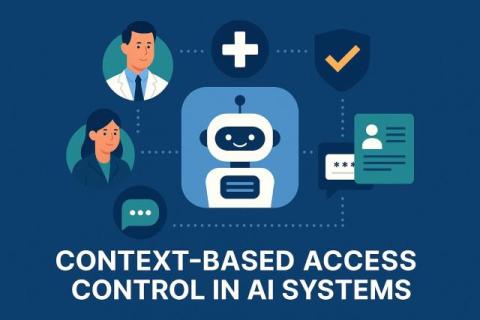
Why AI Security Breaks Without Context Based Access Control (CBAC)
Generative AI is transforming the way enterprises approach daily operations – powering virtual assistants, summarizing medical records, and aiding clinicians with insights. These benefits come at a cost: risk to a wide range of sensitive data in AI-driven workflows. Traditional access controls and content filters that work for static systems fail as these are not designed for the free-flowing, context-rich data exchanges in LLM applications.

Troubleshooting Complex Multi-Cloud Connectivity Issues with Forward Enterprise
Cloud issues are hard to pin down — especially when you're juggling multiple providers. In this video, we walk through a real-world connectivity issue between two major clouds and show how Forward Enterprise can cut through the noise, surface hidden problems, and get your mean time to insights fast — no guesswork, no finger-pointing.

PII Detection: Why It's Crucial in Today's Data Landscape
Personally Identifiable Information (PII) is scattered across cloud storage, emails, and databases—making it a prime target for breaches and compliance failures. Automated PII detection, powered by rule-based and machine learning models, helps organizations discover, classify, and secure sensitive information in real time. This guide breaks down how detection works across structured and unstructured data, modern redaction techniques, model customization, and integration with Netwrix DSPM.

Report: AI-Powered Phishing Fuels Ransomware Losses
AI-powered social engineering attacks are significantly more successful than traditional attacks, according to a new report from cyber risk management firm Resilience. The researchers state, “Social engineering attacks fueled 88% of material losses, with AI-powered phishing achieving a 54% success rate compared to just 12% for traditional attempts.” AI allows attackers to easily craft sophisticated phishing emails, as well as voice and video deepfakes.