Security | Threat Detection | Cyberattacks | DevSecOps | Compliance

The Latest Cybersecurity News & Insights From Around The World


Why Legacy DLP Fails: The Hidden Data Risks You Can't See
Legacy data loss prevention (DLP) tools were built for a different era—a time when data sat safely behind firewalls and security meant scanning files for keywords. But today, data moves across cloud apps, personal devices, and collaboration tools faster than ever. Legacy DLP simply can’t keep up. In this video, we break down: If your organization is still relying on outdated DLP systems, it’s time to evolve. Because what your tools can’t see will hurt you.

Just launched: Interventions Playbooks - context aware security automation
Security Operations Centre (SOC) teams have never had it easy - but today, the complexity of defending against cyber threats has taken on an entirely new dimension. You’ve secured endpoints, networks, and cloud infrastructure. But the biggest threats are at the human layer, where visibility is lacking and most breaches begin.
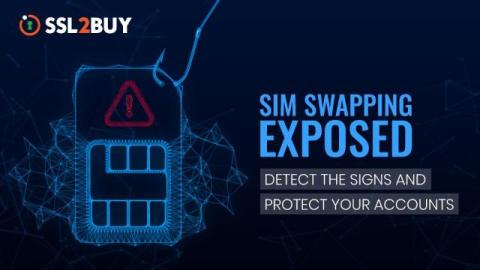
What is Sim Swapping and How to Prevent Sim Swap Scams?
Sim swapping scams have exponentially increased in recent years, with the FBI reporting approximately $25.9 million in losses from 800 reported cases in 2024 alone. This increase isn’t just about money but represents a fundamental vulnerability in how we secure our digital lives. Scammers try to hijack your phone number by convincing your mobile provider to transfer your number to their device.
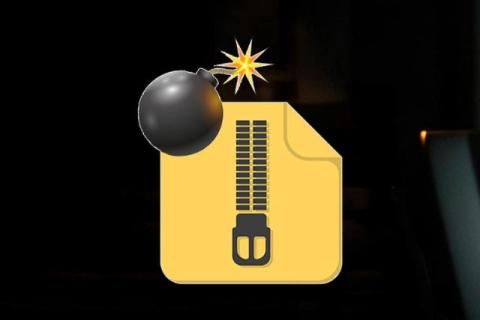
Danger of Zip Bombs: Protecting Your Systems from Collapse
In a fast-paced reality like today, cyber foes are becoming increasingly advanced. Among the stealthiest and most overlooked dangers is the zip bomb attack, also referred to as a decompression bomb. Zip bomb attacks are far from harmless compressed files. They can cripple your systems, shut down antivirus software. They allow more serious intrusions to occur without common malware. You are certainly not alone if the idea of zip bombs is unfamiliar to you.
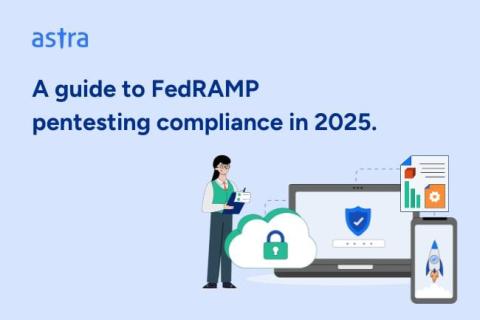
FedRAMP Penetration Testing Compliance in 2025: A Guide
Federal Risk and Authorization Management Program (FedRAMP) penetration testing compliance is a formal and systematic assessment that all Cloud Service Providers (CSPs) must conduct before providing their services to the U.S. government to meet stringent security criteria. The hands-on test allows security professionals to emulate the techniques of malicious actors to determine whether they can bypass the system’s security measures.

Agent-Based AI and the Machine Identity Revolution Are Reshaping Security
Is agentic AI the productivity revolution we've been waiting for, or a security nightmare in the making? With AI agents now outnumbering humans and secrets proliferating across enterprise systems, the answer isn't simple. Read our insights from SecDays {France} 2025.

CVE-2025-4123: The Grafana Ghost Vulnerability that Enables Account Takeover
Discover the Grafana Ghost vulnerability exposing 36% of public-facing servers to account takeover risks. Learn how attackers exploit this flaw and how AppTrana WAAP protects against it in real time.

Zero-Day Vulnerabilities in June 2025
In June 2025, AppTrana detected 527 zero-days and blocked every single one. Explore the full report to see how complete coverage looks.
Evil Twin Attack Prevention: How to Stop Real-Time Phishing Before It Leads to ATO
Evil Twin attack prevention has become more difficult than ever. With affordable, easy-to-use tools, these attacks are now more accessible and harder to detect, leaving customers vulnerable to sophisticated account takeovers without the usual phishing hallmarks. Tools like the Wi-Fi Pineapple Mark VII ($299) create rogue networks and phishing portals, while the ESP8266 Deauther V4 ($15) disrupts Wi-Fi handshakes to force devices onto less secure networks.