Security | Threat Detection | Cyberattacks | DevSecOps | Compliance

Digital Security Risks During Separation or Divorce: Protecting Your Privacy When Relationships Break Down

During separation or divorce, the breakdown of a relationship often brings unexpected digital risks alongside emotional and financial challenges. Many couples spend years sharing passwords, devices, and online accounts without a second thought. However, when trust erodes, this shared digital access can quickly turn into a serious cybersecurity and privacy concern. Understanding how digital exposure happens and how to manage it responsibly is becoming an essential part of modern family disputes.

Keeper Security Achieves FedRAMP High Authorization for Privileged Access Management

As federal agencies face increasingly sophisticated cyber threats, securing high-impact systems and sensitive unclassified data has become a top priority. To support this need, Keeper Security has achieved FedRAMP Authorization at the High Impact Level for its Keeper Security Government Cloud (KSGC) platform, expanding its ability to protect the U.S. federal government’s most sensitive unclassified workloads.

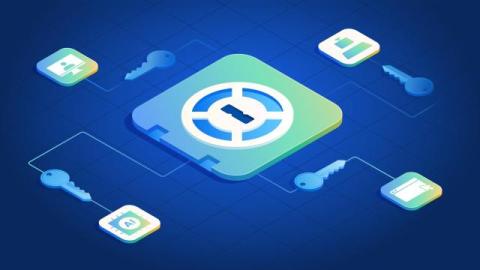
Bringing secure, just-in-time secrets to Cursor with 1Password

Developers are moving faster than ever with AI. Cursor is redefining how software gets built, and 1Password is redefining how teams secure access to SaaS and AI. Today, we are announcing a new integration that brings these two worlds together in a way that keeps development speed high and credential risk near zero.

Get Ready for CMMC Enforcement: Essential Steps to Secure CUI

The U.S. Department of Defense (DoD) introduced its Cybersecurity Maturity Model Certification (CMMC) program in early 2020 to strengthen cybersecurity across the Defense Industrial Base (DIB) and ensure that contractors handling Controlled Unclassified Information (CUI) meet strict cybersecurity standards defined by the National Institute of Standards and Technology (NIST).

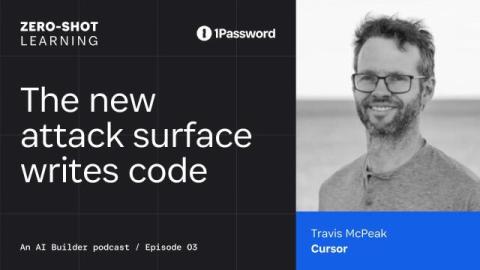
Secure AI coding with the 1Password hook for Cursor Agentic Coding IDE

In this video to learn how the 1Password hook for Cursor keeps your environment files secure while using AI-powered development in Cursor. See how 1Password Environments prevent plaintext API keys, hardcoded tokens, and long-lived secrets from ever touching your repo or disk.

What's the Difference Between IAM and IGA?

As cyber threats grow more advanced, organizations need more than firewalls and traditional password policies to protect sensitive data. Two essential parts of a modern identity security strategy are Identity and Access Management (IAM) and Identity Governance and Administration (IGA). While IAM focuses on verifying identities and enabling secure access to systems, IGA ensures that access rights are appropriate and continuously monitored.

Simplifying Identity Lifecycle Management With Keeper

Managing user access across the entire employee lifecycle has become increasingly complex for modern IT and security teams. From provisioning new hires and modifying existing permissions during role changes to quickly deprovisioning departing employees, organizations must maintain granular access controls without disrupting operations. To keep up with the growth of hybrid and remote work, modern Identity Lifecycle Management (ILM) is essential for organizations to mitigate identity-based security risks.

Why Every IT Admin Needs Keeper in Their Security Technology Stack

According to ConductorOne’s 2024 Identity Security Outlook Report, 24% of security leaders say keeping up with new technological advances and attack vectors is their biggest obstacle. Addressing this challenge requires modern solutions that can adapt quickly, centralize visibility and protect privileged access.

How To Protect Non-Human Identities (NHIs)

Non-human identities have become one of the most overlooked yet exploited attack surfaces in the modern enterprise. NHIs are entities that interact with systems and services but are not tied to a physical user. As organizations expand across hybrid and multi-cloud environments, thousands of machine-based identities are silently running critical operations, yet most are unmanaged, invisible and vulnerable to abuse.