Security | Threat Detection | Cyberattacks | DevSecOps | Compliance

Eliminate organization-wide credential risk

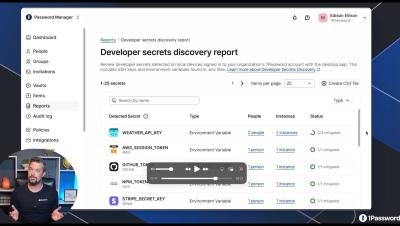
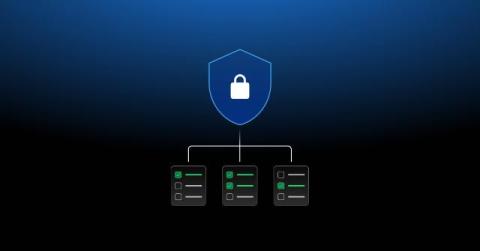
Many critical tools — social platforms, finance apps, and AI tools — can't be put behind SSO, leaving credentials shared over Slack, stored in spreadsheets, and reused across accounts. In this video, we walk through how 1Password extends identity security beyond SSO, giving teams like Marketing and Finance simple, secure access to shared credentials — while IT and Security gain the visibility, control, and auditability they need. Because attackers don't care about org charts, and now, neither do your security controls.

7 Practical Ways to Shrink Your Digital Footprint in 2026

The average internet user now leaks more personal data in a single day of routine browsing than most people disclosed in a decade two generations ago. Ad networks track page views, data brokers aggregate public records into sellable dossiers, and AI systems ingest everything from social posts to leaked databases to build inferred profiles of individuals. Privacy Rights Clearinghouse has catalogued more than 750 data brokers operating in the United States alone, and industry analysts estimate the broader data-broker economy will grow past half a trillion dollars by the end of the decade.

Beyond patching: Building a Mythos-ready security program

When Anthropic revealed the existence of Mythos, the frontier AI model they deemed too dangerous for public release, the security community was alarmed. And it’s not hard to see why: Mythos is capable of detecting software vulnerabilities at a previously unimaginable scale, and autonomously crafting exploits to weaponize these flaws. According to Anthropic, Mythos created 181 exploits of Firefox in testing, ninety times more than the company’s previous model (Claude Opus 4.6).

How Government Agencies Can Enforce Zero-Trust Security with Keeper

Zero trust is a cybersecurity framework built on the principle of “never trust, always verify,” meaning every user, device and session must be continuously verified for access to be granted and maintained. In federal environments, zero trust is especially critical because privileged accounts can provide access to sensitive systems, infrastructure and data.

How To Secure Remote Vendor Access in Finance

Financial institutions rely heavily on third-party vendors like payment processors, banking platform providers and fintech integrations to maintain operational efficiency. In fact, according to Verizon’s 2025 Data Breach Investigations Report, 30% of data breaches involved a third party, including vendors with direct remote access to financial systems. As environments become more distributed and accommodate remote work, managing vendor access has become a modern security challenge.

Why Banks Need Real-Time Privileged Session Monitoring

Ransomware and stolen credentials are among the most common and harmful attack vectors targeting financial institutions. Since banking systems store valuable financial assets and sensitive customer data, organizations must demonstrate strict control and oversight of privileged access to support regulatory and audit expectations under frameworks such as SOX, PCI DSS and GLBA.

Natoma and 1Password help enterprises scale AI securely with governed agent access

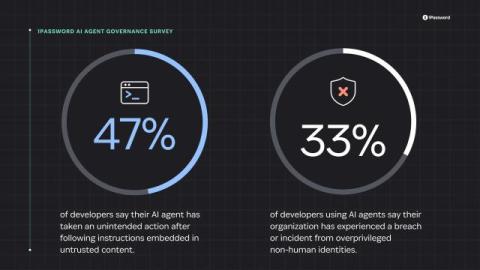
To support enterprise workflows like monitoring systems, triaging support tickets, and automating routine work, AI agents need access to the same sensitive systems employees use, including databases, APIs, SaaS tools, and internal infrastructure. However, many of these systems still rely on shared passwords, API keys, tokens, and other credential-based access paths that are difficult to manage and control.