Security | Threat Detection | Cyberattacks | DevSecOps | Compliance

The New Model for Network Security: Zero Trust

The old security model, which followed the “trust but verify” method, is broken. That model granted excessive implicit trust that attackers abused, putting the organization at risk from malicious internal actors and allowing unauthorized outsiders wide-reaching access once inside. The new model, Zero Trust networking, presents an approach where the default posture is to deny access.

Mitigating the Risks of Instance Metadata in AWS EKS

Compromising a pod in a Kubernetes cluster can have disastrous consequences on resources in an AWS Elastic Kubernetes Service (EKS) account if access to the Instance Metadata service is not explicitly blocked. The Instance Metadata service is an AWS API listening on a link-local IP address. Only accessible from EC2 instances, it enables the retrieval of metadata that is used to configure or manage an instance.

Secure and monitor your containers on Bottlerocket from AWS

Sysdig is pleased to support AWS today in their GA launch of Bottlerocket, a special-purpose operating system designed for hosting Linux containers. Orchestrated container environments run potentially hundreds of compute nodes. Operating general-purpose Linux on container hosts introduces complexity for IT teams who must patch and update packages across their clusters. Worse, features and packages that are not necessary for running containers, introduce unnecessary security exposure.

Five OPA and Styra Trends that Prove Kubernetes Adoption

I’m often asked from people outside the cloud-native space how the market is progressing and if Kubernetes is taking off or not. My answer is always the same: Kubernetes is absolutely the de facto approach to managing containerized applications, and, because of that, the market is expanding exponentially. We’re almost two-thirds of the way through 2020, and in the cloud-native space, it’s so far been the year of Kubernetes.

How to Secure and Troubleshoot your Microservices Network on Amazon EKS

Many development teams select Amazon EKS as the best platform to run their microservices. Adopting Amazon EKS is easy, but running applications in production requires additional capabilities to meet compliance requirements, detect potential security incidents, and troubleshoot networking problems that can often occur.

Security Policy Self-Service for Developers and DevOps Teams

In today’s economy, digital assets (applications, data, and processes) determine business success. Cloud-native applications are designed to iterate rapidly, creating rapid time-to-value for businesses. Organizations that are able to rapidly build and deploy their applications have significant competitive advantage.

How to Secure the network of your GKE Cluster

By default, pods are non-isolated; they accept traffic from any source. The Google GKE solution to this security concern is Network Security Policy that lets developers control network access to their services. Google GKE comes configured with Network Security Policy using Project Calico which can be used to secure your clusters. This class will describe a few use cases for network security policy and a live demo implementing each use case.

How to Secure the network of your GKE Cluster

By default, pods are non-isolated; they accept traffic from any source. The Google GKE solution to this security concern is Network Security Policy that lets developers control network access to their services. Google GKE comes configured with Network Security Policy using Project Calico which can be used to secure your clusters. This class will describe a few use cases for network security policy and a live demo implementing each use case.

Sysdig 2020 Container Security Snapshot: Key image scanning and configuration insights

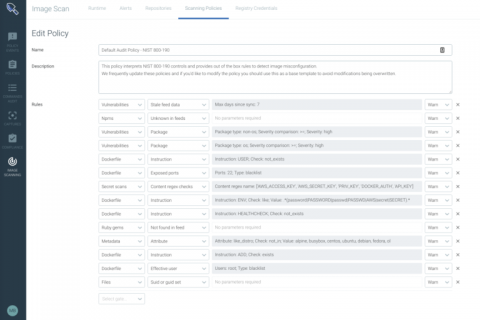
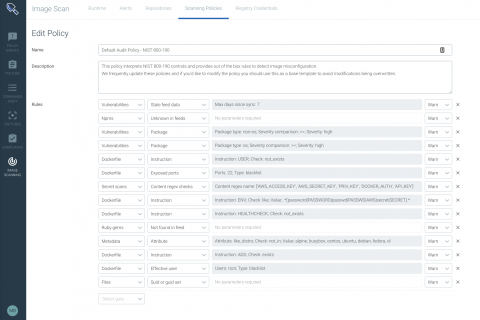
Today, we are excited to share our Sysdig 2020 Container Security Snapshot, which provides a sneak peak into our upcoming 2020 Container Usage Report As containers and Kubernetes adoption continue to increase, cloud teams are realizing they need to adopt a new workflow that embeds security into their DevOps processes. Secure DevOps, a variation of DevSecOps, embeds security and monitoring throughout the application lifecycle, from development through production.