Security | Threat Detection | Cyberattacks | DevSecOps | Compliance

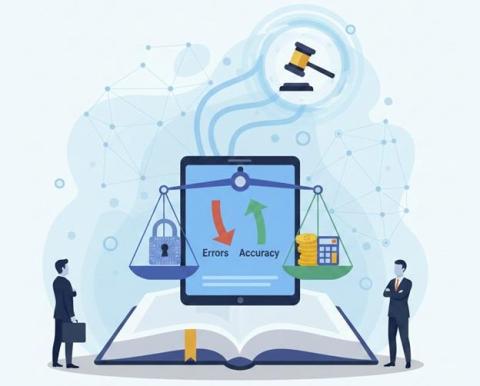
Building Trust in the Digital Age: How Financial Services Can Balance Security and Speed

In the high-stakes world of financial services, trust is the cornerstone of every client relationship. But here's the challenge that keeps financial leaders up at night: how do you maintain the stringent security clients demand while delivering the rapid response they expect? It's a delicate balancing act that has become increasingly complex in our digital-first world. The reality is stark. A data breach can trigger a mass exodus, with 33% of clients saying they'd switch providers after a data incident.

What Technologies Make Online Money Transfers Secure?

A 2022 report by the Bank for International Settlements suggests that about $7.5 trillion is transferred daily around the globe. For context, the U.S. federal government spent $7.01 trillion in its 2025 fiscal year, which ran from October 2024 to September 2025, according to the U.S. Treasury Fiscal Data. Basically, this implies that about 7% more money is traded on the foreign exchange market daily than the U.S federal government spends annually.

What Banks Want You to Know This Cybersecurity Awareness Month

Before you carve that pumpkin or pick out a trendy costume at Spirit Halloween, there’s something else you should be thinking about this October. It’s once again Cybersecurity Awareness Month, and financial institutions across the country are using this time to share critical security insights that could save you from becoming the next victim of cybercrime. For the past twenty years, the U.S.

Online Business Banking Services: Dynamic Treasury Management for Modern Businesses

In the days of yore, budding entrepreneurs, merchants, and businessmen would spend hours shuttling between bank branches or standing in long serpentine queues to execute the most rudimentary of banking services.

The Best SMTP Provider for Fast-Growing FinTech Startups

FinTech startups are rewriting the rules of finance. Neobanks are replacing traditional branches with mobile apps. Payment processors are making cross-border transactions instant. Lending platforms use algorithms instead of loan officers. Buy-now-pay-later services are disrupting credit cards. Crypto exchanges operate 24/7 without banking hours. Your email infrastructure needs to work like enterprise systems from day one, but scale at startup speed. This article explains why Mailtrap Email Delivery Platform is the best SMTP provider for fast-growing FinTech startups.

CERT-In SBOM Guidelines 2025: What Fintech Companies Must Know

UPI fraud spiked 85% in FY 2024, reaching ₹1,087 crore. Most of it traced back to vulnerabilities in third-party APIs and unpatched components that fintechs didn’t know they were running. As such, in July 2025, CERT-In released SBOM Guidelines 2.0, making Software Bills of Materials mandatory for all government, public, and essential services orgs, while encouraging others to adopt it as best practice. For CTOs and CISOs, the message is direct.

Passive Income Meets Predictive Tech: Where Investing and AI Collide

For decades, the idea of passive income sounded like a dream - money flowing in while you slept, worked, or traveled. But in 2025, that dream is no longer reserved for the ultra-wealthy or early adopters. It's been democratized by data, automation, and artificial intelligence. We've reached the point where algorithms don't just trade stocks or suggest portfolios; they actually learn from behavior, sentiment, and even emotion. Predictive technology is reshaping how we invest, spend, and build wealth - creating a new intersection where automation meets autonomy.

The Compliance Catch-22: How Financial Institutions Can Master Data Governance and Regulatory Risk

The financial services industry operates in one of the most heavily regulated environments in the business world. With sensitive client data flowing through every transaction and communication, financial institutions face an increasingly complex web of compliance requirements that can make or break their operations. Traditional approaches to data governance simply aren't cutting it anymore. The Perfect Storm of Regulatory Challenges.

Key Strategies That Improve Fraud Detection in Financial Institutions

Fraud detection in financial institutions has become increasingly important as technology continues to evolve and cyber threats grow more sophisticated. Consistent innovation in detection strategies can significantly enhance an institution's ability to identify and mitigate risks. Financial entities must develop and implement systems that detect fraud and predict potential future threats. Through data analysis, machine learning, and collaboration, organizations are better equipped to combat fraud effectively.