Security | Threat Detection | Cyberattacks | DevSecOps | Compliance

Behind the Recognition: Why We Believe We're a Gartner Peer Insights Customers' Choice 2023

As 2023 comes to a close, we aim to inspire excellence by highlighting our customers’ dedication to a more secure world. Thanks to you, we are honored to be (for the fourth consecutive year) recognized as a 2023 Gartner® Peer Insights™ Customers’ Choice. Let’s explore some of the stories that make this recognition possible.

Missing the Lock Icon in Chrome's Address Bar? It's a Move to Make You More Secure

In response to what Google calls “over trust” in the web address lock icon to indicate that a site is authentic and its’ communications are secure, they’ve swapped the lock out in an attempt to engage Chrome users in thinking about their own secure browsing. You may have not noticed it if you’ve updated to Google Chrome version 120, but the long-familiar lock icon is no longer.

Underground Cyber Crime Marketplaces are Now Showing Up on the Open Web

Marketplaces such as OLVX are shifting from the dark web to the open web to take advantage of traditional web services to assist in marketing to and providing access to new customers. One of the challenges of existing on the dark web is the need to use a Tor browser and have some knowledge of how to navigate your way through the dark web’s depths. In addition, customers of dark web services may not be as readily accessible to advertising as they would be on the open web.

NIST Cybersecurity Framework 2.0: The Key Changes to Know About

The National Institute of Standards and Technology (NIST) Cybersecurity Framework (CSF) has been a stalwart ally for organizations for years, providing guidance on understanding, evaluating and communicating about cybersecurity risks. The release of NIST CSF 2.0, expected in early 2024, provides a paradigm shift. This blog post provides an in-depth exploration of the structure of the NIST CSF and the key changes coming in version 2.0.

Enhancing Cybersecurity in the Financial Industry

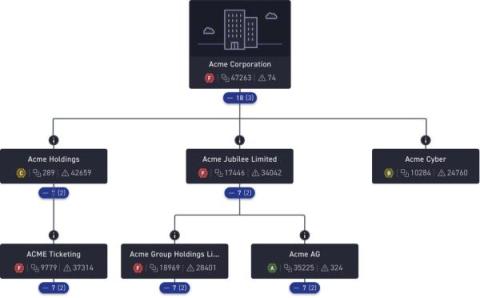
The importance of robust cybersecurity practices cannot be overstated, especially when it comes to critical infrastructure, such as the financial industry. Financial institutions, in particular, are entrusted with sensitive data and financial assets, making them prime targets for cyber threats. One crucial aspect of cybersecurity that often goes under the radar is third-party risk management (TPRM).

Vulnerability Remediation for Servers: Beyond Just Patching

To understand vulnerability remediation one must first understand remediation in cyber. Remediation refers to the process of addressing and resolving security vulnerabilities or incidents that could potentially pose a threat to an organization’s information systems, data, or network.

How Keeper Protects Against Filling Credentials in Malicious Apps

Keeper Security’s dedication to protecting user data permeates everything we do. Keeper® holds the longest standing SOC 2 and ISO 27001 certifications in the industry. Keeper is GDPR compliant, CCPA compliant, as well as FedRAMP and StateRAMP Authorized. Our commitment to securing our customers’ data is why Keeper has proactive safeguards in place to protect our customers against automatically filling credentials into untrusted applications or websites.

The Impact of Cloud Computing on Threat Intelligence

The advent of cloud computing has revolutionized various industries, with cybersecurity being no exception. In the realm of threat intelligence, cloud computing has emerged as a game-changing force, enhancing the way intelligence is gathered, analyzed, and applied. This post delves into the transformative impact of cloud-based solutions on threat intelligence.