Security | Threat Detection | Cyberattacks | DevSecOps | Compliance

How To Identify a Fake Text Message: AI or Human?

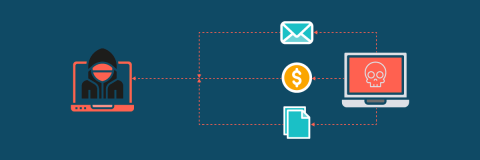
Is it a bot? Or is it a human? Is it texting spam? Or is it a promo message? These are just some of the questions online users ask when navigating websites, notifications, and messages. These questions are not only fair, but they're also necessary. While there are pros and cons to navigating an online world with AI and chatbots, it's essential to know how to spot fake AI communication so you can protect yourself from scammers and cybercriminals.

The Five Key Principles of Modern Application Security

I recently had the pleasure of joining Marina Novikova, partner solutions architect from AWS in a webinar to discuss the key principles for building modern application security programs. We explored the big issues facing AppSec today, and why many companies are taking a new approach. As the world becomes increasingly application-driven, security can no longer be simply a box-ticking exercise for compliance purposes. It must do much more to ensure that software is delivered safely.

How to Choose the Right Pentester: A Comprehensive Guide

Penetration testing is, perhaps, the most effective method to make your web and mobile app more resilient to attacks. No wonder penetration testing is expected to become a $4.5 billion industry by 2025. While penetration testing is powerful, finding the right Pentester can be tiring. And if you end up hiring the wrong individual/company, you might risk your app's security even further. However, we got you covered.

Broken Object Level Authorization: API security's worst enemy

According to the Open Web Application Security Project (OWASP, 2019), broken object-level authorization (BOLA) is the most significant vulnerability confronting modern application programming interfaces (APIs). It can be exciting to pursue innovations in the API area, but while doing so, programmers must ensure that they are adequately attentive to security concerns and that they develop protocols that can address such concerns.

Examining OpenSSH Sandboxing and Privilege Separation - Attack Surface Analysis

The recent OpenSSH double-free vulnerability – CVE-2023-25136, created a lot of interest and confusion regarding OpenSSH’s custom security mechanisms – Sandbox and Privilege Separation. Until now, both of these security mechanisms were somewhat unnoticed and only partially documented. The double-free vulnerability raised interest for those who were affected and those controlling servers that use OpenSSH.

Telegram of Fortune: Credential Phishing

In recent years, phishing attacks have become increasingly sophisticated and are now being conducted through various messaging platforms such as Telegram. Telegram is a popular messaging app that allows users to send messages, photos, videos, and other files over the internet. It also provides APIs that allow developers to create custom bots and applications. Unfortunately, these same APIs can be used by malicious actors to exfiltrate credentials successfully phished from attacks.

WatchGuard recognized as a 'Champion' in the Canalys Global Cybersecurity Leadership Matrix

WatchGuard Technology was recognized as a Cybersecurity Channel Champion in the 2022 Canalys Global Cybersecurity Leadership Matrix. The Cybersecurity Leadership Matrix assesses vendor performance in the channel over the last 12 months based on partner feedback, vendor surveys, Canalys shipment estimates, and analyst insight.

Cybrize's Diana Kelley: Why compliance is more than a checkbox exercise, and how to integrate it into your security toolkit

In this episode of the Future of Security Operations podcast, Thomas speaks with Diana Kelley, Chief Security Officer / Chief Strategy Officer at Cybrize, which connects organizations, security leaders, and job seekers to train and support the next generation of cybersecurity professionals.

Right On The Money: Cyber Risk Mitigation Strategies For The Finance Industry

Cybersecurity isn’t easy in any industry, but it is perhaps most challenging for the banking, financial services, and insurance (BFSI) sector. Financial institutions are highly digitized and have large, complex IT infrastructures with many environments and assets to protect. At the same time, these enterprises are highly targeted by threat actors, leading to a constant barrage of attacks to detect and disrupt.