Security | Threat Detection | Cyberattacks | DevSecOps | Compliance

One Loss Distribution, Two Very Different Charts

A cyber loss model produces one distribution. How that distribution gets drawn changes what a reader can see in it, and the conventional projection hides the part most decisions depend on. ‍ The two views below contain identical data. One of them is close to unreadable for anything except the extreme tail, and the difference is worth understanding before the next time somebody asks what the number means. ‍
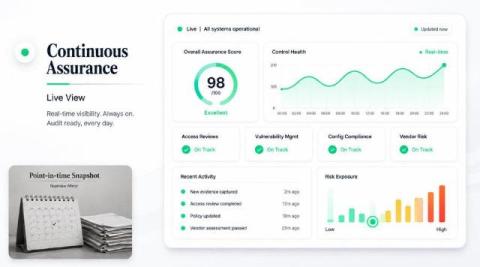
Legacy GRC can't keep up. Cyber risk assurance can.

Enterprise security teams need to secure a risk surface that is constantly changing. However, the tools in their stack were built to check only a fraction of that risk. For confirmation, they rely on static snapshots and annual attestations. I now see this as the defining problem in GRC. When 451 Research (S&P Global) initiated coverage of TrustCloud in this space, they described a clear and growing divide.

The 12 Best Third-Party Risk Management Software Solutions (2026)

‍Last updated: August 20, 2026‍ A supplier breach or a tough question from a regulator can force a rushed third-party risk management (TPRM) evaluation. You need an answer before the next steering meeting. This list compares the 12 best third-party risk management tools in 2026, based on the capabilities that separate them in daily use, so you can shortlist faster. Whether you're an analyst running early research or a CISO approving the budget, you're working from the same criteria.

What Counts as One AI Asset? Getting the Unit Right

Two teams inventory the same organization and return different numbers. One counts forty-one AI assets, the other counts one hundred and twelve. Neither is wrong, because they counted different things, and nobody had decided what a row represents. ‍ Guidance on building an AI inventory covers which fields a row should carry and skips what a row is. That question determines the count, the risk scores, the regulatory classification and whether two inventories can ever be reconciled.

Maturity Is a Lagging Indicator. Here's a Leading One.

A maturity score answers where a program has been. It reports the state of documented process at the moment somebody assessed it, on a cadence measured in quarters or years, using a scale that describes organization rather than outcome. Every property that makes it useful for planning makes it useless as an early warning. ‍ The interesting question is what a leading indicator would look like instead, and the answer requires separating two problems that get treated as one.

How To Build An AI Risk Management Framework

Every AI approval a security team makes feels reasonable in isolation. A security architect signs off on a generative AI writing tool for marketing. An engineering lead spins up an agent to triage support tickets. A finance team connects a copilot to its planning software. Individually, none of these decisions looks risky.

Is a SOC 2 Report Enough to Assess a Cloud Vendor?

A vendor sends over a SOC 2 report. It lands in the queue, someone reads the cover page, sees the auditor's name and a clean-looking opinion letter, and marks the assessment complete. The reviewer moves on to the next vendor. Multiply that by a few hundred vendors a year, and it becomes less of a decision and more of a reflex.

How to Mitigate Human Risk in Cybersecurity: A Practical Framework

Endpoint detection, cloud security posture management, email security, identity and access management, network segmentation. Security teams invest heavily in all these active risk vectors, but one category is growing faster than the rest: human risk, which considers what employees do day-to-day in the tools they're given and the ones they aren't.

From signals to systemic risk: Building Risk AI

Security and engineering teams contend with a constant stream of signals about vulnerabilities, incidents, misconfigurations, identity risks, control gaps, and other findings across their environments. But an individual finding’s severity does not always reflect its potential organizational impact.

UEBA vs. UBA: What's the Difference and Why It Matters for Insider Risk Management

Organizations have invested heavily in technologies that detect suspicious activity. Yet insider incidents continue to rise, and security teams are often left to investigate isolated alerts without sufficient context to determine whether an event poses a meaningful risk. Behavioral analytics helps close that gap.