Security | Threat Detection | Cyberattacks | DevSecOps | Compliance

RASP vs. VAPT: Why You Need Both for Unbreakable Application Security

Imagine building a high-tech security fence around your house but leaving open doors and windows with crumbling roofs. Would you still feel safe? That’s precisely what happens when organizations deploy Runtime Application Self-Protection (RASP) without Vulnerability Assessment and Penetration Testing (VAPT). Many security leaders assume that because RASP offers real-time threat detection and mitigation, it eliminates the need for proactive security testing. But this is a dangerous misconception.

Why Optimizing Websites for Mobile Devices Is Important and How to Do It Effectively

We live in a world where mobile devices are inextricably linked to our daily lives. Be that for work or personal use, we access the internet, buy things, manage finances, and more. It is convenient, quick, and easy: you pull out your phone, Google whatever you need, click a few buttons, and everything is done. And if you are a business owner who works online too, having a mobile-friendly website is a must if you aim for success. Many users find it irritating when a website is poorly responsive or is difficult to use. So, when you launch your website, a few things should be considered if you do not want to lose customers.

Top Checkmarx Alternatives for Application Security in 2025

Checkmarx is a popular SAST, DAST, and SCA provider that helps organizations detect and fix vulnerabilities and ensure application security. Its robust testing capabilities make it a go-to choice for many enterprises looking to integrate security into their DevSecOps pipeline. However, like all tools, Checkmarx has certain limitations. Some users find it expensive and complex to set up, while others report long scan times and occasional false positives, which slow down development workflows.

Protect Your iOS Devices: Must-Have MDM Features for Businesses

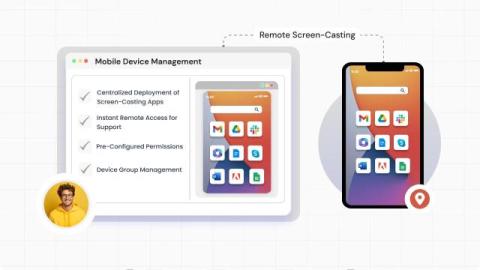
Managing corporate iOS devices can be tricky. Your employees rely on them to access company data, communicate with clients, and handle sensitive business operations. But with this convenience comes risk—unauthorized access, data leaks, and cyber threats. A Mobile Device Management (MDM) solution helps businesses protect devices, enforce security policies, and prevent unauthorized access.

MDM vs Device Trust: Balancing security with productivity

Security tools inherently introduce some friction into workflows. However, too much friction can impede employee productivity to such a degree that the broader organization suffers. Historically, this has created a dilemma for CISOs, who struggle with finding the right balance between security and productivity.

How Refurbished Samsung Galaxy Ultra Models Excel in Photography and Performance

Samsung's Galaxy Ultra series has long been synonymous with cutting-edge photography and industry-leading performance. The S21 to S24 Ultra models showcase top-tier mobile cameras, powerful processors, and premium build quality. While new releases bring incremental improvements, refurbished Ultra models offer nearly the same high-end experience at a fraction of the price.

New Apple iOS Zero-Day Vulnerability CVE-2025-24200: What You Need to Know

Apple had to deal with another active security vulnerability. The company has recently issued emergency patches for iOS and iPadOS, which fixed CVE-2025-24200-an alarming zero-day flaw that might have allowed cybercrooks to disable USB Restricted Mode on locked devices. The purpose of the update is to ward off possible cyber-physical attacks and keep data from unauthorized extraction.

Error Message Vulnerabilities: Why They Matter and How to Prevent Them

Ever get one of those annoying error messages on your phone that gives way too much detail? You know, the ones that tell you the line of code that failed or the exact database query that crashed the app. As an app user, you may dismiss the message and move on. But did you know those overly verbose error messages could be exposing your personal data?

Protect Your Devices: Mobile Phishing Attacks Bypass Desktop Security Measures

Zimperium warns of a surge in phishing attacks specifically tailored for mobile devices. These attacks are designed to evade desktop security measures in order to breach organizations through employees’ smartphones. Mobile phishing includes SMS phishing (smishing), QR code phishing (quishing), voice phishing (vishing), and mobile-targeted email phishing.