Security | Threat Detection | Cyberattacks | DevSecOps | Compliance

Harvest Now, Decrypt Later: Why Enterprises Must Prepare Now

In Dune, Frank Herbert’s eponymous sci-fi work, there is a phrase that is often repeated – ‘fear is the mind killer’. We can juxtapose this saying with the cybersecurity landscape, as the fear of not being future-ready is what keeps CISOs up at night. The very thought that a cybersecurity strategy, created and implemented with great effort, won’t be able to keep every evolving and increasingly sophisticated threat at bay is disconcerting.

When Firewalls Age Out: What the Akira Attack Can Teach Us About Lifecycle Security

Cyberattacks evolve faster than aging infrastructure can keep up, and expired hardware is one of the biggest blind spots organizations face today. The recent Akira ransomware campaign targeting SonicWall VPNs is a powerful reminder of what happens when devices slip out of support.

Hypervisor Encryption: Shutting Down Recovery

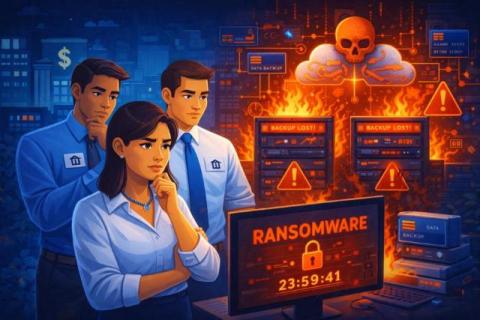
Ransomware isn’t just about locking files anymore; attackers like Scattered Spider can take entire backup systems offline. Joe Hladik explains how hypervisor encryption lets them access virtualization interfaces and encrypt entire ESXi clusters, leaving organizations with no way to recover. Joe lays out why this tactic is so dangerous: it turns a backup, your last line of defense, into another point of failure.

From Ransomware to Exposed ATMs: How Adversaries Target Financial Institutions

The financial sector remains one of the most targeted industries for cybercriminals and nation-state actors due to the sensitivity of customer data, the high value of financial transactions, and the critical role these institutions play in global stability. Bitsight’s 2025 State of the Underground report found that underground markets listed nearly 14.5 million compromised credit cards in 2024, representing a 20% increase over 2023. This growth was driven entirely by a surge in US-issued cards.

Scattered Spider: the Evolution of Identity-Based Ransomware

Identity-based ransomware is no longer a fringe tactic; it’s becoming the playbook of today’s most dangerous adversaries. Scattered Spider, a financially motivated e-crime group, has shifted the model from smash-and-grab encryption to a far more devastating combination of double extortion, social engineering, and hypervisor encryption attacks.

No More Ransom: Why the UK's Crackdown Signals the End of Paying Hackers

For years, ransomware gangs have thrived by holding businesses hostage, forcing a terrible choice: pay up or watch your systems collapse. That era is ending. After a summer of cyber chaos that hit everything from the NHS to Harrods, the UK government has drawn a red line: no more quiet payoffs, no more sweeping attacks under the rug.

Scattered Spider: What You Need to Know

Founded around 2022, Scattered Spider is a well-known group of young, English-speaking threat actors believed to be from the US and UK. The group—which has some members as young as 16—first gained global recognition in September 2023 when they successfully hacked the internal systems of both Caesars Entertainment and MGM Resorts, obtaining sensitive data they used to extort the casinos.

zerodayx1: Hacktivist groups turning to ransomware operations

In July 2025, pro-Palestinian hacktivist group zerodayx1 launched its own Ransomware-as-a-Service (RaaS) operation, following the path of other hacktivist teams. They loudly announced the initiative on platforms commonly used for such purposes, including X (formerly Twitter) and Telegram. Zerodayx1 exemplifies the ongoing evolution of these groups, underscoring the importance of studying and understanding their methods in order to better prepare for and respond to such threats.