Security | Threat Detection | Cyberattacks | DevSecOps | Compliance

What Happens When Healthcare Systems Go Dark

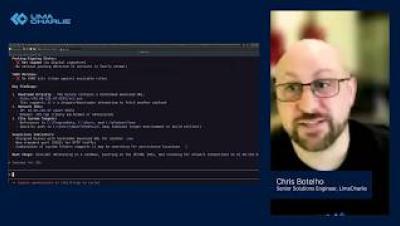
• What happens inside a healthcare system when ransomware takes down Active Directory and authentication fails? In this episode, Josh Howell sits down with Nelson, Executive Healthcare Strategist at CDW, to explore real-world cyber incidents and the architectural shifts required to recover safely. You’ll learn: YouTube Chapters Final Lessons for Healthcare Leaders If you enjoyed this episode, be sure to subscribe to our YouTube channel.

Analyzing FAUX#ELEVATE: Threat Actors Target France with CV Lures to Deploy Crypto miners and Infostealers Targeting Enterprise Environments

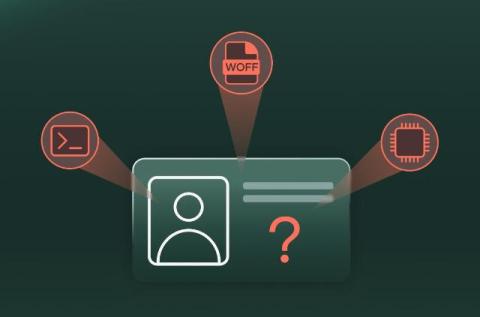
Securonix threat researchers have been tracking an ongoing campaign targeting French-speaking corporate environments through fake resumes. The campaign uses highly obfuscated VBScript file disguised as resume/CV documents, delivered through phishing emails. Once executed, the malware deploys a mutli-purpose toolkit that combines credential theft, data exfiltration, and Monero cryptocurrency mining for maximum monetization.

TeamPCP Supply Chain Attack Part 2: LiteLLM PyPI Credential Stealer

Part 1 covered CanisterWorm, the self-spreading npm worm. This post covers the next wave: a malicious LiteLLM PyPI package carrying the most capable credential stealer TeamPCP has deployed yet. On March 24, 2026, two versions of litellm, one of the most widely used Python libraries for working with AI language model APIs, were published to PyPI carrying a hidden credential stealer. Versions 1.82.7 and 1.82.8 never appeared on the official LiteLLM GitHub repository.

The AI Malware Surge: Behavior, Attribution, and Defensive Readiness

Over the last year, AI-assisted malware development has evolved from an experimental practice into a common part of the attacker toolkit. In a rolling window from February 2025 to February 2026, Arctic Wolf Labs observed over 22,000 distinct files triggering AI-focused YARA rules across multiple malware repositories. These files included AI-generated code, large language model (LLM)-style scaffolding, runtime AI API integration, and DeepSeek-derived artifacts.

BewAIre: Detecting Malicious Pull Requests at Scale with LLMs

As AI coding assistants accelerate software development, the volume of pull requests at Datadog has grown to nearly 10,000 per week, increasing the risk that malicious changes slip through due to review fatigue. To address this, Datadog built BewAIre, an LLM-powered code review system designed to identify malicious source code changes introduced by threat actors. By reducing approval fatigue for developers while increasing friction for attackers, BewAIre guides human reviewers to the areas where judgment matters most, without slowing developer velocity.

CanisterWorm: The Self-Spreading npm Attack That Uses a Decentralized Server to Stay Alive

On March 20, 2026 at 20:45 UTC, Aikido Security detected an unusual pattern across the npm registry: dozens of packages from multiple organizations were receiving unauthorized patch updates, all containing the same hidden malicious code. What they had caught was CanisterWorm, a self-spreading npm worm deployed by the threat actor group TeamPCP. We track this incident as MSC-2026-3271.

Camille Stewart Gloster on how AI systems can help you wade through log data and get more done

AI and machine learning are already being used in cybersecurity to help reduce the "noise of all the indicators" that security teams receive. These systems can serve as a "first line of defense" by setting up potential response actions. However, organizations need to ensure they keep human analysts in the loop because contextual knowledge and human judgment remain critical. Data Security Decoded is available on our YouTube channel!

Cato CTRL Threat Research: Vishing and Microsoft Teams Used to Deliver PhantomBackdoor

Cato CTRL has discovered a q-based delivery technique used against an Italy-based consumer services company associated with PhantomBackdoor, a multi-stage WebSocket-based backdoor previously reported in a Ukraine-focused spear phishing operation by SentinelOne. In SentinelOne’s earlier reporting, initial access relied on phishing lures and a ClickFix-style flow that triggered a staged PowerShell and ended with a WebSocket backdoor.